2,2,6,6-Tetramethylpiperidinooxy CAS#2564-83-2 Product Description
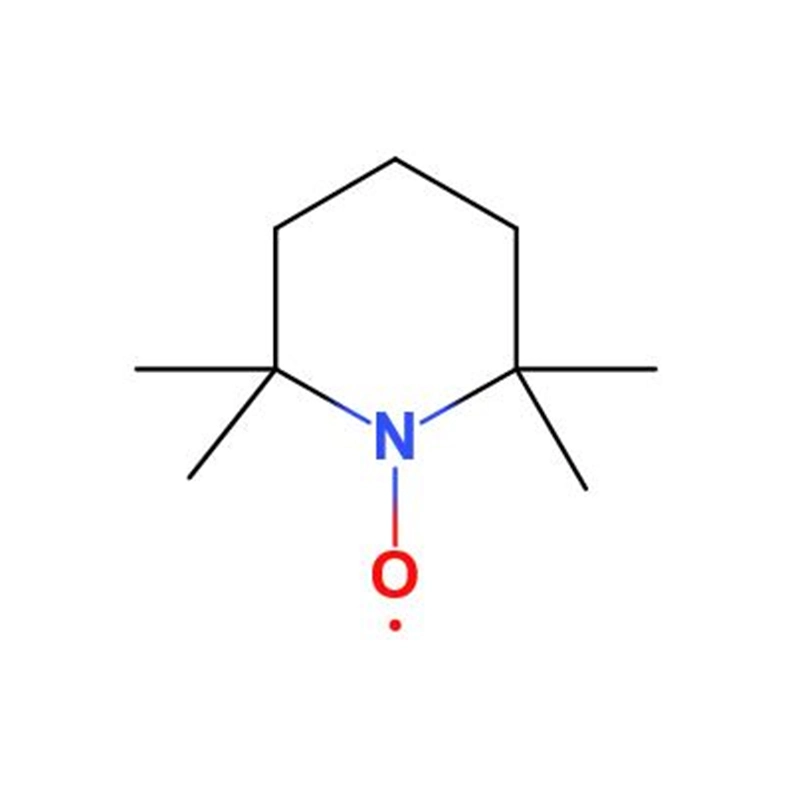
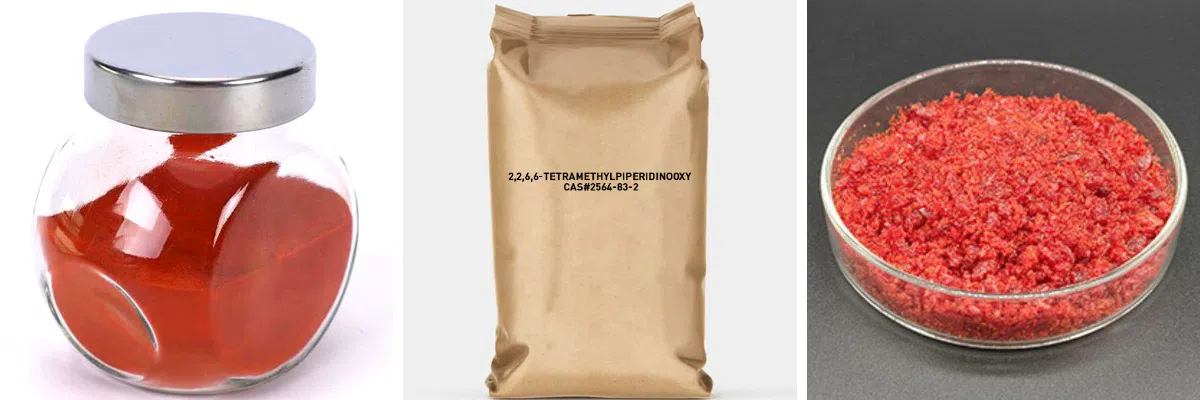
2,2,6,6-Tetramethylpiperidinyl Oxide (TEMPO) is a well-known piperidine-based nitroxide free radical with a wide range of applications in organic synthesis, chemical research, and industrial oxidation processes. It typically appears as an orange-red crystalline solid or liquid and exhibits a tendency to sublime under suitable conditions. TEMPO has good solubility in a variety of common solvents, including water, ethanol, and benzene, making it convenient for use in different reaction systems and chemical applications.
One of the distinctive characteristics of TEMPO is its excellent ability to capture free radicals and effectively quench singlet oxygen, making it a valuable compound in radical-related chemical research and oxidation control processes. In addition to its radical-scavenging properties, TEMPO is widely recognized as an efficient and selective oxidation catalyst in organic synthesis.
In particular, TEMPO-based catalytic systems are commonly employed for the selective oxidation of primary alcohols to aldehydes and secondary alcohols to ketones. This catalytic capability offers an effective approach to controlling oxidation reactions while maintaining good selectivity toward the desired products. Owing to its unique nitroxide radical structure and versatile catalytic properties, TEMPO has become an important reagent and catalyst in modern organic chemistry and fine chemical synthesis.
2,2,6,6-Tetramethylpiperidinooxy CAS#2564-83-2 Chemical Properties
| Melting point | 36-38 °C(lit.) |
| Boiling point | 193°C |
| Density | 1 g/cm3 |
| Vapor pressure | 0.4 hPa (20 °C) |
| Refractive index | 1.4350 (estimate) |
| Fp | 154 °F |
| Storage temp | Store below +30°C. |
| Solubility | 9.7g/l |
| Form | Powder |
| Color | Yellow to green |
| PH | 8.3 (9g/l, H2O, 20℃) |
| Water Solubility | Soluble in all organic solvents. Insoluble in water. |
| Merck | 149140 |
| BRN | 1422418 |
| Stability: | Stable. Incompatible with strong acids, strong oxidizing agents. Refrigerate. |
| InChIKey | RVWUHFFPEOKYLB-UHFFFAOYSA-N |
| CAS DataBase Reference | 2564-83-2(CAS DataBase Reference) |
| NIST Chemistry Reference | 1-Piperidinyloxy, 2,2,6,6-tetramethyl-(2564-83-2) |
| EPA Substance Registry System | 1-Piperidinyloxy, 2,2,6,6-tetramethyl- (2564-83-2) |
2,2,6,6-Tetramethylpiperidinooxy CAS#2564-83-2 Safety Information
| Hazard Codes | C,Xi |
| Risk Statements | 34-36/37/38 |
| Safety Statements | 26-36/37/39-45-24/25 |
| RIDADR | UN 3263 8/PG 2 |
| WGK Germany | 3 |
| RTECS | TN8991900 |
| Autoignition Temperature | 275 °C |
| TSCA | Yes |
| HazardClass | 8 |
| PackingGroup | III |
| HS Code | 29333999 |
2,2,6,6-Tetramethylpiperidinooxy CAS#2564-83-2 Product Application
2,2,6,6-Tetramethylpiperidinyl Oxide (TEMPO) is a versatile chemical compound with extensive applications in chemistry, biology, the food industry, agriculture, and numerous other industrial fields. Owing to its unique nitroxide free radical structure and excellent chemical properties, TEMPO is widely utilized as a free radical scavenger, singlet oxygen quencher, and highly efficient selective oxidation catalyst. Its multifunctional characteristics make it an important reagent in polymer chemistry, organic synthesis, and various chemical research applications.
1. Applications in Polymer Chemistry
In polymer chemistry, TEMPO plays an important role in controlling free radical reactions and improving polymer stability. It is widely employed as a free radical scavenger, polymerization inhibitor, anti-aging agent, thermal degradation inhibitor, and light and heat stabilizer. By capturing reactive free radicals, TEMPO helps regulate unwanted radical reactions and reduces the risk of premature polymerization, thermal degradation, and oxidative deterioration.
Furthermore, TEMPO can react with active polymer chain radicals to form covalent dormant species. These dormant compounds can subsequently dissociate under appropriate conditions, regenerating active chain radicals that continue the polymerization process. This reversible radical-trapping mechanism provides an effective means of controlling chain growth and is particularly valuable in controlled radical polymerization techniques.
2. Applications in Organic Synthesis
In organic synthesis, TEMPO is widely recognized as an efficient and selective catalyst for the oxidation of various alcohols and polyols. It facilitates the conversion of primary alcohols into aldehydes while minimizing further oxidation to carboxylic acids. Meanwhile, secondary alcohols can be selectively oxidized into the corresponding ketones. Its excellent chemoselectivity makes TEMPO a valuable catalyst in the preparation of pharmaceutical intermediates, fine chemicals, and other organic compounds.
Among the commonly employed catalytic systems, the TEMPO/NaClO/NaBr oxidation system is particularly important. In this system, sodium hypochlorite (NaClO) acts as the primary co-oxidant, while sodium bromide (NaBr) assists in the catalytic oxidation process. TEMPO is oxidized by NaClO to generate the active N-oxoammonium species, which serves as the actual oxidizing agent responsible for alcohol oxidation.
During the catalytic cycle, the N-oxoammonium species oxidizes the hydroxyl-containing substrate, converting primary or secondary alcohols into their corresponding carbonyl compounds. Meanwhile, TEMPO is regenerated through the action of the co-oxidant, enabling the catalytic cycle to continue and supporting efficient oxidation reactions.
In addition to the TEMPO/NaClO/NaBr system, numerous other TEMPO-based catalytic oxidation systems have been developed and widely adopted in organic synthesis. These systems offer flexibility in reaction conditions and provide effective approaches for selective alcohol oxidation across a broad range of synthetic applications.
With its outstanding radical-scavenging ability, reversible radical-trapping behavior, and excellent catalytic performance, TEMPO has become an important multifunctional compound in modern polymer science, organic synthesis, and industrial chemical applications.