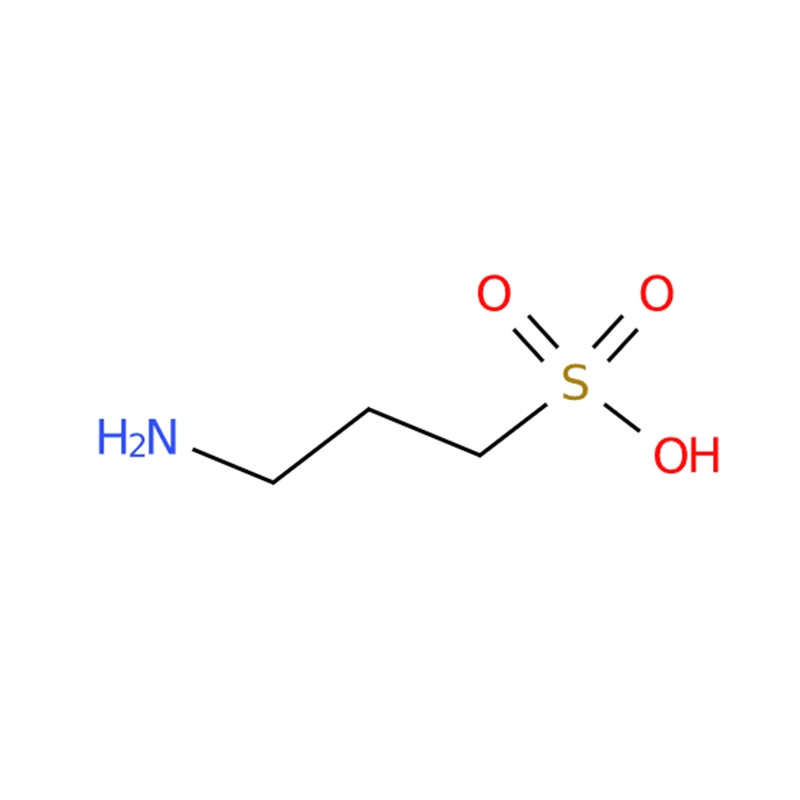
3-Amino-1-Propanesulfonic Acid CAS#3687-18-1 Product Description
3-Amino-1-propanesulfonic acid, also known as tramiprosate, is a compound that has attracted considerable research interest for its potential application in the treatment of Alzheimer's disease (AD). It has been investigated in clinical studies in North America and Europe, including Phase III trials, with clinical findings published in scientific literature. Its proposed therapeutic mechanism involves binding to soluble amyloid-beta (Aβ) peptides, which may help interfere with the formation and aggregation of amyloid structures. By reducing the aggregation, deposition, and accumulation of amyloid-beta in the brain, the compound is being studied for its potential to influence the pathological processes associated with Alzheimer's disease. These properties have made 3-Amino-1-propanesulfonic acid an important subject of research in the development of potential amyloid-targeting approaches for neurodegenerative diseases.
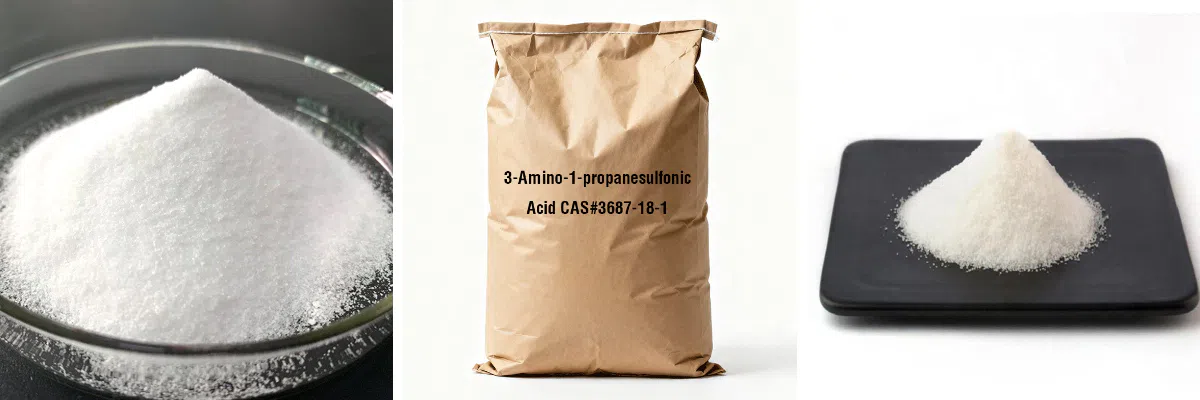
3-Amino-1-Propanesulfonic Acid CAS#3687-18-1 Chemical Properties
| Melting point | 293 °C (dec.)(lit.) |
| Density | 1.202 (estimate) |
| Refractive index | 1.5130 (estimate) |
| Storage temp | 2-8°C |
| Solubility | Water (Slightly) |
| Pka | 1.06±0.50(Predicted) |
| Form | Crystalline Powder |
| Color | White to slightly blue |
| LogP | -4.555 |
| CAS DataBase Reference | 3687-18-1(CAS DataBase Reference) |
3-Amino-1-Propanesulfonic Acid CAS#3687-18-1 Safety Information
| Hazard Codes | Xi |
| Risk Statements | 36/37/38 |
| Safety Statements | 26-36 |
| WGK Germany | 1 |
| HS Code | 29049090 |
3-Amino-1-Propanesulfonic Acid CAS#3687-18-1 Product Application
The metabolic profile of 3-Aminopropanesulfonic acid is an important factor influencing its pharmacokinetic behavior, including absorption, distribution, metabolism, and elimination, as well as its potential therapeutic performance. Understanding its metabolic pathways can provide valuable insights into its stability, bioavailability, and overall behavior within the body. To further optimize its pharmacological properties, research has explored the development of prodrugs and structurally modified derivatives of 3-Aminopropanesulfonic acid. These approaches aim to improve characteristics such as metabolic stability, absorption, and resistance to premature degradation. Following administration, appropriately designed prodrug formulations can undergo metabolic or enzymatic conversion in the body to release the active parent compound. Such strategies offer potential opportunities to optimize drug delivery, enhance pharmacokinetic properties, and support the further development of 3-Aminopropanesulfonic acid for therapeutic applications.