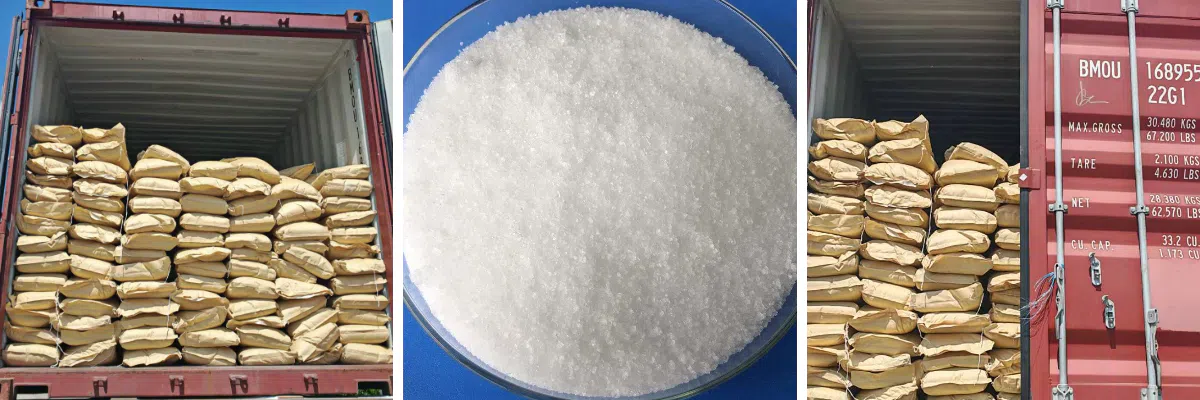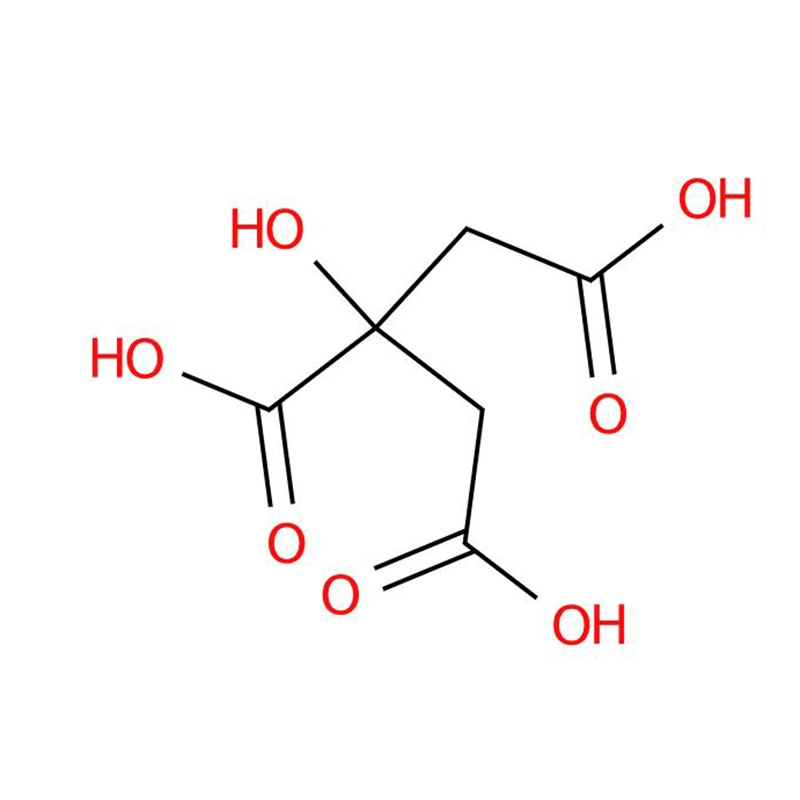
Citric Acid CAS#77-92-9 Product Introduction
Anhydrous citric acid is a naturally occurring organic compound that serves as an intermediate metabolite in the physiological processes of both plants and animals. It is widely used across the food, pharmaceutical, and chemical industries due to its versatile properties. The product typically appears as colorless, transparent or translucent crystals, granules, or fine powder.
Anhydrous citric acid is odorless and has a distinctively sour taste, delivering a sharp, refreshing tartness that may leave a slightly astringent aftertaste. When exposed to warm air, it may gradually lose moisture, while under humid conditions, it can exhibit slight deliquescence. To maintain product quality, it should be stored in a cool, dry environment in a tightly sealed container.
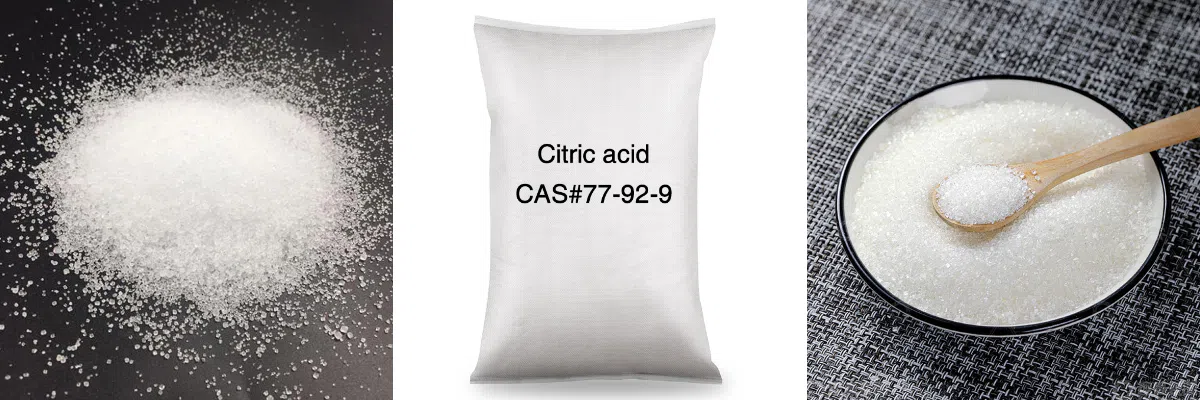
Citric Acid CAS#77-92-9 Chemical Properties
| Melting point | 153-159 °C (lit.) |
| Boiling point | 248.08°C (rough estimate) |
| density | 1.67 g/cm3 at 20 °C |
| bulk density | 560kg/m3 |
| vapor density | 7.26 (vs air) |
| vapor pressure | <0.1 hPa (20 °C) |
| refractive index | 1.493~1.509 |
| FEMA | 2306 | CITRIC ACID |
| Fp | 100 °C |
| storage temp. | 2-8°C |
| solubility | Citric acid also dissolves in absolute (anhydrous) ethanol (76 parts of citric acid per 100 parts of ethanol) at 15 °C. |
| form | grit |
| pka | 3.14(at 20℃) |
| color | White |
| PH | 3.24(1 mM solution);2.62(10 mM solution);2.08(100 mM solution); |
| Odor | Odorless |
| biological source | synthetic |
| Odor Type | odorless |
| explosive limit | 8%, 65°F |
| soluble in Water (1174g/L at 10°C, 1809g/L at 30°C, 3825g/L at 80°C). | |
| Sensitive | Hygroscopic |
| λmax | λ: 260 nm Amax: 0.20 λ: 280 nm Amax: 0.10 |
| Merck | 14,2326 |
| JECFA Numbr | 218 |
| BRN | 782061 |
| Stability: | Stable. Incompatible with bases, strong oxidizing agents, reducing agents, metal nitrates. |
| InChIKey | KRKNYBCHXYNGOX-UHFFFAOYSA-N |
| LogP | -1.64 |
| CAS DataBase Reference | 77-92-9(CAS DataBase Reference) |
| NIST Chemisty Reference | 1,2,3-Propanetricarboxylic acid, 2-hydroxy-(77-92-9) |
| EPA Substance Registry System | Citric acid (77-92-9) |
Citric Acid CAS#77-92-9 Safety Information
| Hazard Codes | Xi,C,T |
| Risk Statements | 41-36/37/38-36/38-37/38-34-36-35-61-60 |
| Safety Statements | 26-39-37/39-24/25-36/37/39-45-36-53 |
| RIDADR | UN 1789 8/PG 3 |
| WGK Germany | 1 |
| RTECS | GE7350000 |
| F | 9 |
| TSCA | Yes |
| HS Code | 2918 14 00 |
| Hazardous Substances Data | 77-92-9(Hazardous Substances Data) |
| Toxicity | LD50 in mice, rats (mmol/kg): 5.0, 4.6 i.p. (Gruber, Halbeisen) |
Citric Acid CAS#77-92-9 Product Application
Citric acid is a weak organic acid classified as a commodity chemical, with annual global production exceeding one million tonnes. It is manufactured on an industrial scale primarily through fungal fermentation, using sugar-rich raw materials such as molasses and microorganisms like Aspergillus niger. Naturally present in plants, animal tissues, and bodily fluids, citric acid occurs in particularly high concentrations in various fruits and vegetables, especially citrus fruits such as lemons and limes.
Its principal applications include serving as an acidulant, flavor enhancer, and chelating agent in a wide range of products. Historically, citric acid has also been employed as a chemical restrainer in photographic processing, particularly in collodion developers and silver nitrate solutions used to sensitize salted-paper and albumen-paper photographic materials.