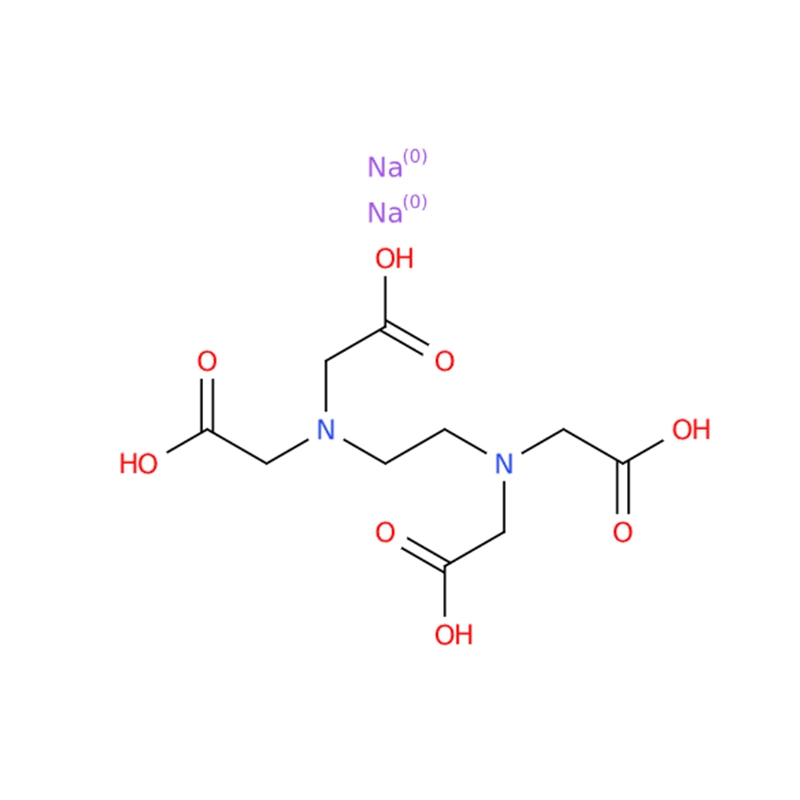
Ethylenediaminetetraacetic Acid Disodium Salt CAS#139-33-3 Product Description
Ethylenediaminetetraacetic acid (EDTA) is widely utilized across a broad range of industrial applications due to its excellent ability to bind and form stable complexes with various metal ions. This chelating property makes it a valuable ingredient in formulations where controlling metal ions is essential for product performance and stability. EDTA is available in several salt forms, including disodium EDTA (EDTAS), allowing manufacturers to select a suitable form according to their specific formulation requirements. In addition to its industrial uses, EDTA and its salts are commonly incorporated into cosmetic and personal care products as chelating agents. By binding trace metal ions, they can help improve formulation stability, maintain product quality, and support the overall performance of finished products.
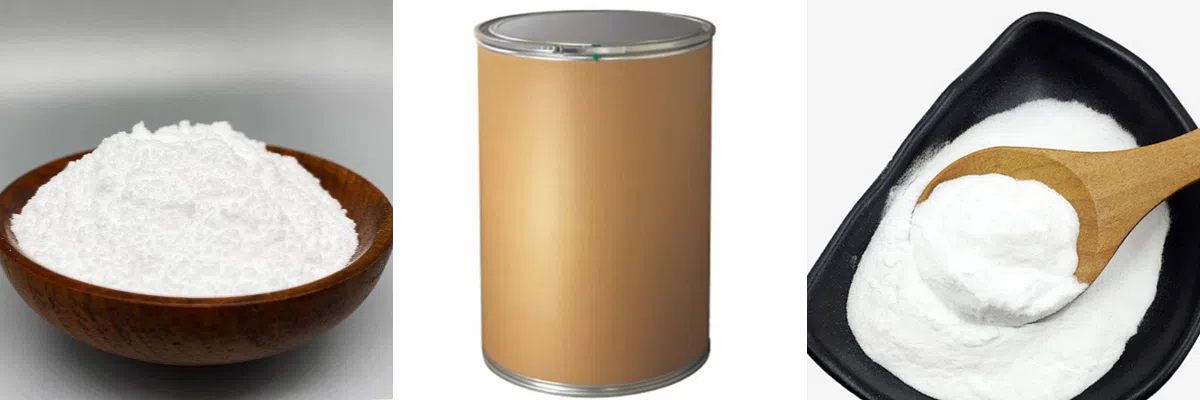
Ethylenediaminetetraacetic Acid Disodium Salt CAS#139-33-3 Chemical Properties
| Melting point | 248 °C (dec.)(lit.) |
| Boiling point | >100 °C |
| Density | 1.01 g/mL at 25 °C |
| Vapor pressure | 0Pa at 25℃ |
| Refractive index | n20/D 1.363 |
| Storage temp | 2-8°C |
| Solubility | H2O: clear, colorless |
| Form | solution |
| Color | ≤5 (0.5 M)(APHA) |
| PH | 8.0±0.2 |
| Odor | at 100.00?%. odorless |
| Water Solubility | Miscible with water. |
| BRN | 3822669 |
| Stability | Hygroscopic |
| LogP | -4.3 at 25℃ |
| CAS DataBase Reference | 139-33-3(CAS DataBase Reference) |
| EPA Substance Registry System | Ethylenediaminetetraacetic acid disodium salt (139-33-3) |
| Absorption | cut-off at 268nm |
Ethylenediaminetetraacetic Acid Disodium Salt CAS#139-33-3 Safety Information
| Hazard Codes | Xn,C |
| Risk Statements | 36/38-36/37/38-22-34-21/22 |
| Safety Statements | 26-36-37/39-45-36/37/39-36/37 |
| WGK Germany | 2 |
| RTECS | AH4410000 |
| TSCA | Yes |
| HS Code | 29224999 |
| Hazardous Substances Data | 139-33-3(Hazardous Substances Data) |
| Toxicity | mouse,LD50,intraperitoneal,260mg/kg (260mg/kg),Nippon Yakurigaku Zasshi. Japanese Journal of Pharmacology. Vol. 52, Pg. 126S, 1956. |
Ethylenediaminetetraacetic Acid Disodium Salt CAS#139-33-3 Product Application
Ethylenediaminetetraacetic acid (EDTA) is an aminopolycarboxylic acid widely recognized for its strong metal-chelating properties. As a hexadentate ligand, it can coordinate with metal ions through six donor sites, forming stable complexes that commonly exhibit an octahedral coordination structure. Its disodium salt, disodium EDTA, is frequently used in laboratory and hematological applications due to its ability to bind calcium ions. By reducing the availability of calcium required for the blood coagulation process, disodium EDTA helps prevent blood samples from clotting, making it particularly useful for routine hematological examinations and blood sample preservation. However, its interaction with calcium can also cause EDTA-dependent pseudothrombocytopenia, an in vitro phenomenon in which platelet clumping leads to a falsely low platelet count in laboratory results. In addition to its role in blood collection and analysis, EDTA can enhance the antibacterial activity of lysozyme by chelating certain metal ions that contribute to the stability of bacterial cell envelopes, thereby improving the enzyme's effectiveness against susceptible bacteria under appropriate conditions.