
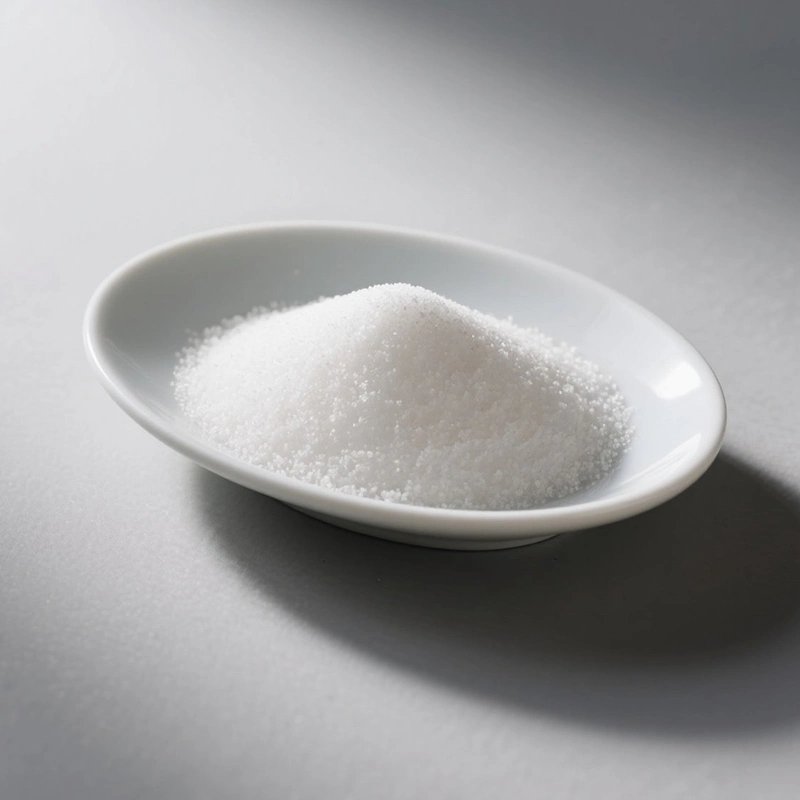
Products Description
Citric acid monohydrate serves a wide range of applications across different fields. It is commonly used in the preparation of citrate buffers for platelet studies in intravital microscopy and as a buffering agent in antigen and epitope retrieval procedures. Furthermore, it acts as an effective pH regulator in the food, beverage, and pharmaceutical industries. In animal nutrition, it also helps improve the absorption and utilization of dietary calcium, contributing to better nutritional efficiency.
Product Name: | Citric acid monohydrate |
Synonyms: | 1,2,3-Propanetricarboxylic acid, 2-hydroxy-, monohydrate;1,2,3-Propanetricarboxylicacid,2-hydroxy-,monohydrate;2,3-propanetricarboxylicacid,2-hydroxy-monohydrate;citric;Citric acid hydrate;Citricacidhydrate;Citronensαure-hydrat;Citric acid monohydrate, 99.5+% |
CAS: | 5949-29-1 |
MF: | C6H10O8 |
MW: | 210.1388 |
EINECS: | 200-662-2 |
Product Categories: | BioXtra Buffers;Biological Buffers;Buffers A to Z;Building Blocks;Carbonyl Compounds;Carboxylic Acids;Chemical Synthesis;Nutrition Research;Organic Building Blocks;Other Biochemical;Phytochemicals by Chemical Classification;ACS Grade;Essential Chemicals;Inorganic Salts;Research Essentials;Solutions and Reagents;Citric Acid Monohydrate is mainly used as acidulating, flavoring and preservative in foods and beverages;Food additive and acidulant;C-D, Puriss p.a. ACS;Puriss p.a. ACS;Buffers A to ZCarbonyl Compounds;Other BiochemicalBiological Buffers;Biochemicals Found in Plants;C6Nutrition Research;Carboxylic Acids;SigmaUltra Buffers;ACS GradeCarbonyl Compounds;Essential Chemicals;Other Biochemical;Analytical Reagents;Analytical Reagents for General Use;Puriss;Buffers A to ZEssential Chemicals;USP/MultiCompendial Grade Buffers;USPBiological Buffers;Biological Buffers;Routine Reagents;Buffers A to ZNutrition Research;Reagent GradeMetabolic Pathways;Metabolites and Cofactors on the Metabolic Pathways Chart;Other BiochemicalEssential Chemicals;TCA;5949-29-1;bc0001;C6 |
Mol File: | 5949-29-1.mol |
Chemical Properties
Melting point | -94 °C(lit.) |
Boiling point | 56 °C760 mm Hg(lit.) |
density | 0.791 g/mL at 25 °C(lit.) |
bulk density | 800-1000kg/m3 |
vapor density | 2 (vs air) |
vapor pressure | 184 mm Hg ( 20 °C) |
refractive index | n |
Fp | 1 °F |
storage temp. | no restrictions. |
solubility | Citric Acid Monohydrate is very soluble in water, freely soluble in ethanol and sparingly soluble in ether. |
form | Solid |
pka | 3.138, 4.76, 6.401 |
Specific Gravity | 0.810 (20/4℃) |
color | White |
Odor | Typical, practically odorless |
PH | 1.85 (50g/l, H2O, 25℃) |
Water Solubility | 1630 g/L (20 oC) ;H2O: soluble 54% (w/w) at 10°C (Citric acid in water) |
Sensitive | Hygroscopic |
Merck | 14,2326 |
BRN | 4018641 |
Stability: | Stable. Incompatible with oxidizing agents, bases, reducing agents, nitrates. |
InChIKey | YASYEJJMZJALEJ-UHFFFAOYSA-N |
CAS DataBase Reference | 5949-29-1(CAS DataBase Reference) |
NIST Chemistry Reference | Citric acid monohydrate(5949-29-1) |
EPA Substance Registry System | 1,2,3-Propanetricarboxylic acid, 2-hydroxy-, hydrate (1:1) (5949-29-1) |
Product Applications
Citric Acid Monohydrate is a naturally occurring tricarboxylic acid commonly found in citrus fruits. It is widely utilized as a pharmaceutical excipient because of its antioxidant properties, helping preserve the stability of active ingredients and extend product shelf life. It also functions as a preservative and acidulant for pH regulation. In addition, citric acid acts as an anticoagulant by binding calcium ions in the blood. It is further used as an acidifying agent, food additive, and synergist to enhance the effectiveness of antioxidant formulations.


