
Products Description
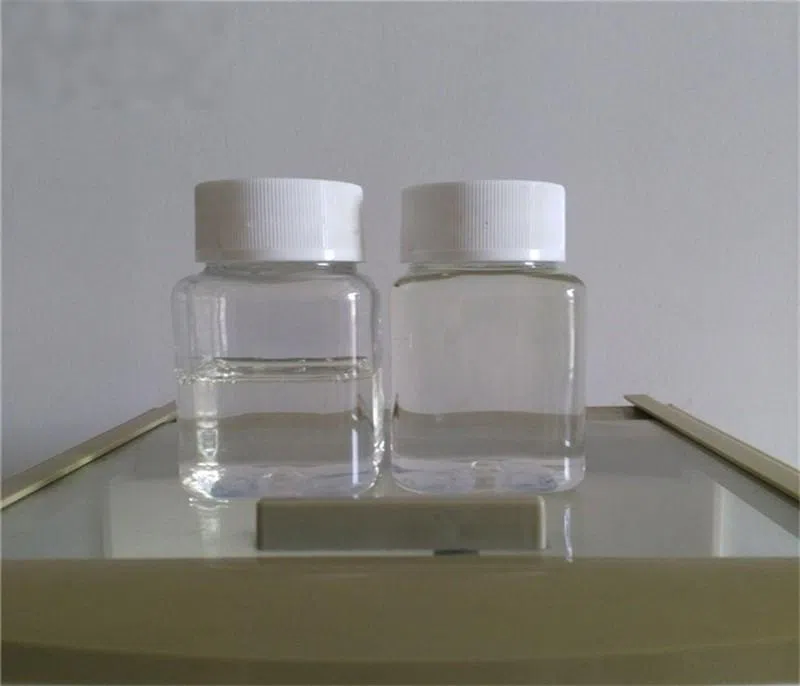
Cyclohexanone is a colorless, transparent liquid with a characteristic earthy odor. Its impure form may appear pale yellow in color. It is miscible with many organic solvents and readily soluble in ethanol and ether. Its lower and upper flammability limits are 1.1% and 9.4%, respectively. Cyclohexanone is incompatible with strong oxidizing agents and nitric acid.
Approximately 96% of cyclohexanone produced is used in industrial applications, primarily as a chemical intermediate in the manufacture of nylon 6 and nylon 66. Through oxidation or chemical conversion, cyclohexanone can be transformed into adipic acid and caprolactam, which are key precursors in the production of these nylon materials. In addition, cyclohexanone is widely used as an industrial solvent in various formulations, including paints, lacquers, and resins. It has not been identified as a naturally occurring substance in biological or environmental processes.
Chemical Properties
Melting point | -47 °C (lit.) |
Boiling point | 155 °C (lit.) |
density | 0.947 g/mL at 25 °C (lit.) |
vapor density | 3.4 (vs air) |
vapor pressure | 3.4 mm Hg ( 20 °C) |
refractive index | n20/D |
FEMA | 3909 | CYCLOHEXANONE |
Fp | 116 °F |
storage temp. | Store at +5°C to +30°C. |
solubility | 90g/l |
pka | 17(at 25℃) |
form | Liquid |
color | APHA: ≤10 |
Relative polarity | 0.281 |
PH | 7 (70g/l, H2O, 20℃) |
Odor | Like peppermint and acetone. |
explosive limit | 1.1%, 100°F |
Odor Type | minty |
Water Solubility | 150 g/L (10 ºC) |
Merck | 14,2726 |
JECFA Number | 1100 |
BRN | 385735 |
Henry's Law Constant | 1.2 x 10⁻⁵ atm?m3/mol at 25 °C (Hawthorne et al., 1985) 6.92 x 10⁻⁵ atm?m3/mol at 60.00 °C, 10.7 at 70.00 °C, 16.4 at 80.00 °C (headspace-GC, Hovorka et al., 2002) |
Exposure limits | TLV-TWA 100 mg/m3 (25 ppm) (ACGIH); IDLH 5000 ppm (NIOSH). |
Dielectric constant | 18.2(20℃) |
Stability: | Stable. Combustible. Incompatible with strong oxidizing agents. |
LogP | 0.86 at 25℃ |
CAS DataBase Reference | 108-94-1(CAS DataBase Reference) |
IARC | 3 (Vol. 47, 71) 1999 |
NIST Chemistry Reference | Cyclohexanone(108-94-1) |
EPA Substance Registry System | Cyclohexanone (108-94-1) |
Safety Information
Hazard Codes | Xn |
Risk Statements | 10-20-41-38-20/21/22 |
Safety Statements | 25-36/37/39-26 |
RIDADR | UN 1915 3/PG 3 |
OEB | A |
OEL | TWA: 25 ppm (100 mg/m3) [skin] |
WGK Germany | 1 |
RTECS | GW1050000 |
Autoignition Temperature | 788 °F |
TSCA | Yes |
HS Code | 2914 22 00 |
HazardClass | 3 |
PackingGroup | III |
Hazardous Substances Data | 108-94-1(Hazardous Substances Data) |
Toxicity | LD50 orally in rats: 1.62 ml/kg (Smyth) |
IDLA | 700 ppm |
Product Applications
Cyclohexanone is an important chemical raw material and a key intermediate in the production of caprolactam, adipic acid, and nylon. It is widely used as a solvent and diluent in the formulation of paints, printing inks, synthetic resins, and synthetic rubber. It is also employed as a degreasing agent in the leather-processing industry.
In industrial applications, cyclohexanone serves as a versatile organic solvent and a raw material for the production of synthetic resins and fibers. It is particularly suitable for dissolving paints containing nitrocellulose, vinyl chloride polymers and their copolymers, as well as methacrylate-based polymers. Additionally, it is used as a solvent for pesticides, including organophosphate insecticides, dyes, aviation lubricant formulations, greases, waxes, and rubber products.
Other applications include its use as a leveling agent in silk dyeing and finishing, a degreasing agent for metal polishing, and a solvent in wood coatings, paint removal, surface cleaning, decontamination, and stain removal. It is also capable of dissolving fibers, resins, rubbers, paraffins, shellac, and various other organic substances.
In organic synthesis, cyclohexanone can react with cyanoacetic acid through a condensation reaction to form cyclohexylidene acetic acid. Subsequent elimination and decarboxylation produce cyclohexene acetonitrile, which can then undergo hydrogenation to yield cyclohexene ethylamine [3399-73-3], an intermediate used in the synthesis of certain pharmaceutical compounds.
Furthermore, cyclohexanone has applications in analytical chemistry and metal extraction due to its ability to dissolve various complexes formed by metals and organic reagents. It can be used in the determination of bismuth and in the extraction of metals such as uranium, thorium, cobalt, and titanium.


