
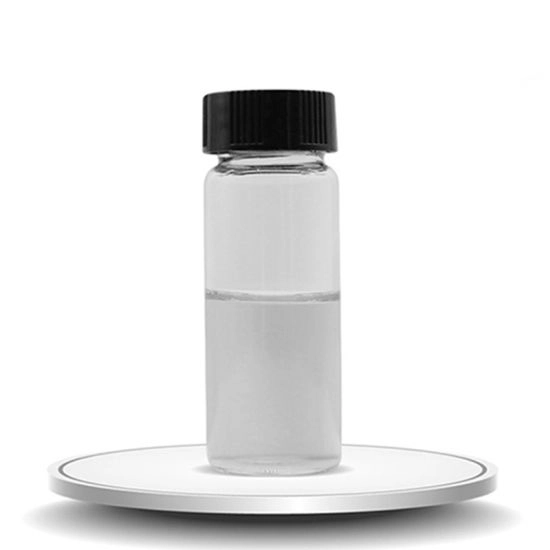
Cyclohexanone is an important chemical raw material and a key intermediate in the production of caprolactam, adipic acid, and nylon. It is widely used as an industrial solvent and diluent in the manufacture of paints, printing inks, synthetic resins, and synthetic rubber. It also serves as a degreasing agent in the leather industry.
Cyclohexanone is commonly employed as a solvent for fibers, resins, rubbers, paraffins, shellac, and various organic compounds. It is particularly effective in dissolving nitrocellulose, vinyl chloride polymers and their copolymers, as well as methacrylate-based paints. In addition, it is used as a solvent for dyes, greases, waxes, pesticides such as organophosphate insecticides, and piston aviation lubricants. Other applications include its use as a leveling agent in silk dyeing and finishing, a metal-polishing degreaser, a wood-coloring agent, and a cleaning solvent for paint stripping, decontamination, and stain removal.
In organic synthesis, cyclohexanone serves as an important solvent and chemical intermediate. It can react with cyanoacetic acid through a condensation reaction to form cyclohexylidene acetic acid, which subsequently undergoes elimination and decarboxylation to produce cyclohexene acetonitrile. Further hydrogenation yields cyclohexene ethylamine [3399-73-3], an intermediate used in the synthesis of certain pharmaceutical compounds.
Furthermore, cyclohexanone can dissolve a wide range of complexes formed by metals and organic reagents. It is used in analytical chemistry for bismuth determination and in extraction processes involving rare metals, including uranium, thorium, cobalt, and titanium.
Melting point | -20°C |
Boiling point | 196-225 °C(lit.) |
density | 1.19 g/mL at 25 °C(lit.) |
vapor pressure | 0.2 mm Hg ( 20 °C) |
refractive index | n20/D |
Fp | 212 °F |
storage temp. | Store below +30°C. |
explosive limit | 8% |
InChI | InChI=1S/C8H14O4.C7H12O4.C6H10O4/c1-11-7(9)5-3-4-6-8(10)12-2;1-10-6(8)4-3-5-7(9)11-2;1-9-5(7)3-4-6(8)10-2/h3-6H2,1-2H3;3-5H2,1-2H3;3-4H2,1-2H3 |
InChIKey | QYMFNZIUDRQRSA-UHFFFAOYSA-N |
SMILES | C(=O)(OC)CCC(=O)OC.C(C(=O)OC)CCCC(=O)OC.C(C(=O)OC)CCC(=O)OC |
EPA Substance Registry System | Hexanedioic acid, dimethyl ester, mixt. with dimethyl butanedioate and dimethyl pentanedioate (95481-62-2) |
Safety Information
Hazard Codes | Xi,E |
Risk Statements | 38-41-36-36/37/38-3 |
Safety Statements | 26-36-39-35 |
RIDADR | UN 3265 8/PG 3 |
WGK Germany | 3 |
Autoignition Temperature | 698 °F |
HS Code | 3824 99 92 |
Product Applications
Chemical Properties | Dibasic ester is an ester of a dicarboxylic acid. Non-flammable, non-corrosive, and quickly biodegrading – all factors leading to an environmentally-friendly product. Easily soluble in alcohol and only slightly soluble in water, it is colorless, clear and has a slightly fruity odor. |
Uses | Dibasic ester was commonly used as lubricants, solvents, plasticizers, additives, and spin finishes. It acts as a coating agent for magnet and enamel wires, magnetic memory discs, automobiles, coils, cans, sheets, industrial paint, et cetera. |
Toxics Screening Level | The ITSL for Dibasic Esters(DBE) is 1 μg/m3 based on annual averaging time. |
Paint Industry: It is widely used as a high-boiling-point solvent in paint formulations. It helps dissolve resins, pigments, and other components, while its slow evaporation during the drying process promotes the formation of a smooth, uniform coating. It also enhances the gloss and fullness of the finished paint, improves fluidity and leveling properties, and helps minimize surface defects.
Ink Industry: It serves as a solvent and diluent in printing inks, facilitating ink transfer and drying during the printing process. It also improves printability and adhesion, making it suitable for various printing techniques, including gravure printing and screen printing.
Chemical Synthesis: It is used as a raw material in the production of polymer materials, such as polyester resins and polyurethanes. During polyester synthesis, it can react with diols and other compounds to produce polyesters with specific properties, which are subsequently used in the manufacture of products such as fibers and plastic films.
Cleaning Industry: Owing to its excellent solvency, it is used for cleaning metal surfaces, electronic components, and other materials. It effectively removes oil, grease, and various other organic contaminants.


