
Products Description
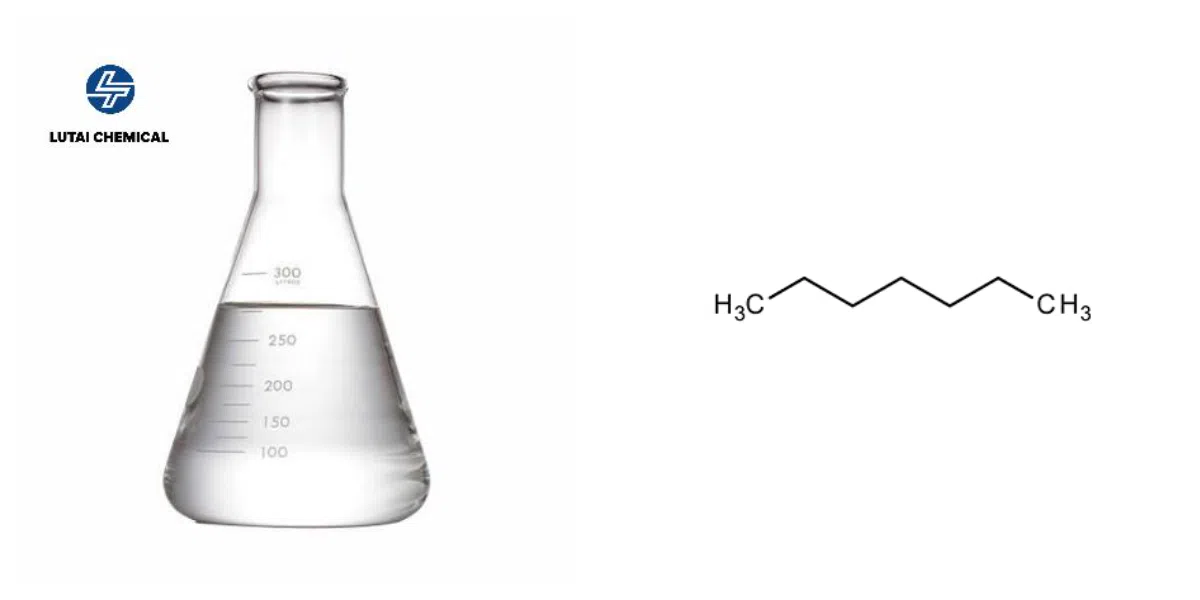
N-Heptane is a highly flammable liquid naturally present in crude oil and widely used in the automotive and chemical industries. Its major applications include use as an industrial solvent, a reference fuel for determining gasoline knock ratings, an automotive starting fluid component, and a constituent of paraffinic naphtha. However, occupational exposure to n-heptane may cause adverse health effects, including central nervous system (CNS) depression, skin irritation, and discomfort or pain. Other aliphatic hydrocarbons, such as n-octane (CH₃(CH₂)₆CH₃), n-nonane (CH₃(CH₂)₇CH₃), and n-decane (CH₃(CH₂)₈CH₃), also have various industrial applications. Exposure to these compounds in occupational settings may likewise pose potential health risks to workers. Therefore, appropriate handling, storage, and disposal practices are essential to minimize exposure, prevent adverse health effects, and maintain chemical safety while protecting both human health and the environment.
Chemical Properties
Melting point | −91 °C(lit.) |
Boiling point | 98 °C(lit.) |
density | 0.684 g/mL at 20 °C |
vapor density | 3.5 (vs air) |
vapor pressure | 40 mm Hg ( 20 °C) |
refractive index | n |
Fp | 30 °F |
storage temp. | Store at +5°C to +30°C. |
solubility | acetone: miscible(lit.) |
form | Liquid |
pka | >14 (Schwarzenbach et al., 1993) |
Specific Gravity | 0.684 (20/4℃) |
color | ≤10(APHA) |
Relative polarity | 0.012 |
Odor | Gasoline. |
Odor Threshold | 0.67ppm |
explosive limit | 1-7%(V) |
Water Solubility | practically insoluble |
λmax | λ: 200 nm Amax: ≤1.0 |
Merck | 14,4659 |
BRN | 1730763 |
Henry's Law Constant | 0.901, 1.195, and 1.905(atm?m3/mol) at 26.0, 35.8, and 45.0 °C, respectively (dynamic headspace, Hansen et al., 1995) |
Exposure limits | NIOSH REL: TWA 85 ppm (350 mg/m3), 15-min ceiling 440 ppm (1,800 mg/m3), IDLH 750 ppm; OSHA PEL: TWA 500 ppm (2,000 mg/m3); ACGIH TLV: TWA 400 ppm, STEL 500 ppm (adopted). |
Dielectric constant | 1.9(20℃) |
Stability: | Stable. Incompatible with oxidizing agents, chlorine, phosphorus. Highly flammable. Readily forms explosive mixtures with air. |
InChIKey | IMNFDUFMRHMDMM-UHFFFAOYSA-N |
LogP | 4.660 |
CAS DataBase Reference | 142-82-5(CAS DataBase Reference) |
NIST Chemistry Reference | Heptane(142-82-5) |
EPA Substance Registry System | Heptane (142-82-5) |
Absorption | 0.10 at 225nm |
Safety Information
Hazard Codes | F,Xn,N |
Risk Statements | 11-38-50/53-65-67 |
Safety Statements | 9-16-29-33-60-61-62-23 |
RIDADR | UN 1206 3/PG 2 |
OEB | A |
OEL | TWA: 85 ppm (350 mg/m3), Ceiling: 440 ppm (1800 mg/m3) [15-minute] |
WGK Germany | 3 |
RTECS | MI7700000 |
F | 3-10 |
Autoignition Temperature | 433 °F |
TSCA | Yes |
HazardClass | 3 |
PackingGroup | II |
HS Code | 29011000 |
Hazardous Substances Data | 142-82-5(Hazardous Substances Data) |
Toxicity | LC (2 hr in air) in mice: 75 mg/l (Lazarew) |
IDLA | 750 ppm |
Product Applications
As a Solvent: N-Heptane is widely used as an organic solvent across various industries, including coatings, printing inks, and adhesives. It effectively dissolves resins, rubber, and other organic substances, facilitating coating application, ink transfer, and adhesive formulation processes. In laboratory applications, it also serves as an extraction solvent for isolating specific compounds from mixtures, such as oils and other natural components derived from plants and spices.
As a Chemical Raw Material: N-Heptane is an important feedstock for the synthesis of various organic compounds and chemical intermediates. It can be used in the production of heptenes, heptanols, and other organic derivatives, which are further utilized in the manufacture of plastics, rubber, surfactants, fragrances, and other fine chemical products.


