
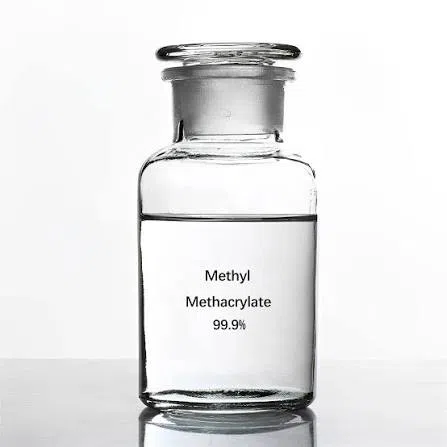
Products Description
Methylmethacrylate(MMA)isanorganiccompoundwiththemolecularformulaCH₂=C(CH₃)COOCH₃.Itisacolorlessliquidandthemethylesterofmethacrylicacid(MAA).Asanimportantindustrialmonomer,itisproducedonalargescaleandisprimarilyusedinthemanufactureofpoly(methylmethacrylate)(PMMA).
Methylmethacrylateischaracterizedbyitscolorlessappearance,highvolatility,andsharp,fruityodor.Itexhibitsarelativelyhighvaporpressureofapproximately4kPaat20°C,moderatewatersolubilityof15.8g/L,andalowoctanol/waterpartitioncoefficient(logKow=1.38).Commercial-grademethylmethacrylatetypicallyhasapurityofapproximately99.9%andcontainssmallamountsofpolymerizationinhibitorstopreventunwantedpolymerizationduringstorageandtransportation.
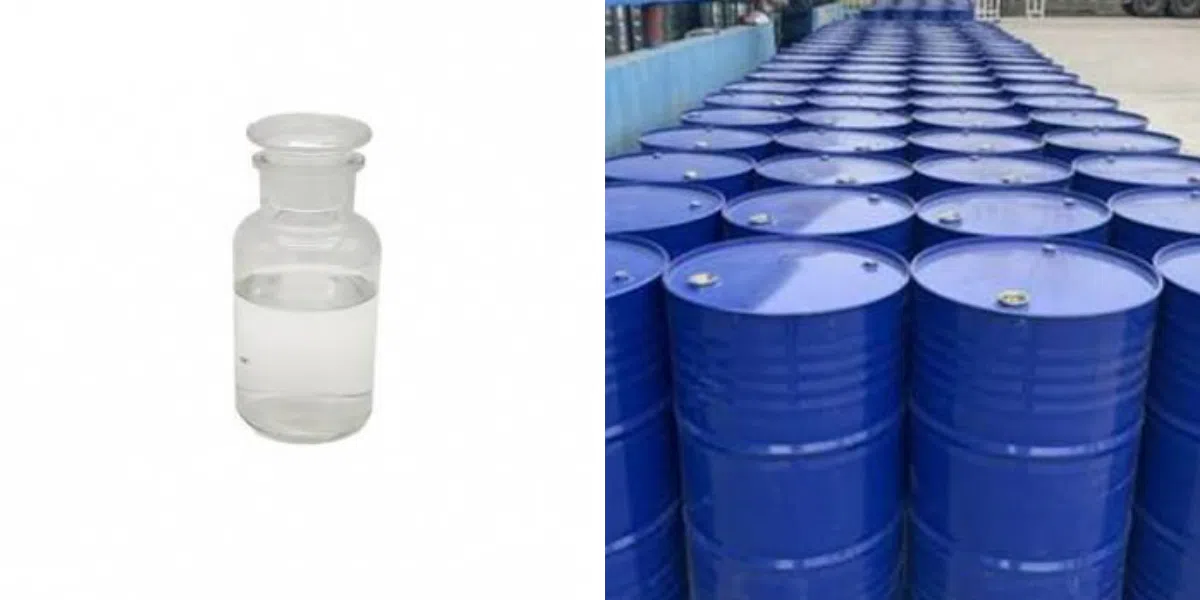
Chemical Properties
Melting point | -48 °C (lit.) |
Boiling point | 100 °C (lit.) |
density | 0.936 g/mL at 25 °C (lit.) |
vapor density | 3.5 (vs air) |
vapor pressure | 29 mm Hg ( 20 °C) |
FEMA | 4002 | METHYL 2-METHYL-2-PROPENOATE |
refractive index | n20/D |
Fp | 50 °F |
storage temp. | 2-8°C |
solubility | 15g/l |
form | Crystalline Powder or Crystals |
color | White to pale yellow |
Odor | at 0.10 % in dipropylene glycol. acrylic aromatic fruity |
Odor Type | acrylate |
explosive limit | 2.1-12.5%(V) |
Odor Threshold | 0.21ppm |
Water Solubility | 15.9 g/L (20 ºC) |
Merck | 14,5941 |
JECFA Number | 1834 |
BRN | 605459 |
Henry's Law Constant | 2.46 x 10⁻⁴ atm?m3/mol at 20 °C (approximate - calculated from water solubility and vapor pressure) |
Exposure limits | NIOSH REL: TWA 100 ppm (410 mg/m3), IDLH 1,000 ppm; OSHA PEL: TWA 100 ppm; ACGIH TLV: TWA 100 ppm with intended TWA and STEL values of 50 and 100 ppm, respectively. |
Dielectric constant | 2.9(20℃) |
Stability: | Volatile |
InChIKey | VVQNEPGJFQJSBK-UHFFFAOYSA-N |
LogP | 1.38 at 20℃ |
CAS DataBase Reference | 80-62-6(CAS DataBase Reference) |
IARC | 3 (Vol. Sup 7, 60) 1994 |
NIST Chemistry Reference | 2-Propenoic acid, 2-methyl-, methyl ester(80-62-6) |
EPA Substance Registry System | Methyl methacrylate (80-62-6) |
Safety Information
Hazard Codes | F,Xi,T |
Risk Statements | 11-37/38-43-39/23/24/25-23/24/25 |
Safety Statements | 24-37-46-45-36/37-16-7 |
RIDADR | UN 1247 3/PG 2 |
OEB | A |
OEL | TWA: 100 ppm (410 mg/m3) |
WGK Germany | 1 |
RTECS | OZ5075000 |
Autoignition Temperature | 815 °F |
TSCA | Yes |
HazardClass | 3 |
PackingGroup | II |
HS Code | 29161410 |
Hazardous Substances Data | 80-62-6(Hazardous Substances Data) |
Toxicity | The acute toxicity of methyl methacrylate is low. Irritation of the skin, eye, and nasal cavity has been observed in rodents and rabbits exposed to relatively high concentrations of methyl methacrylate. The chemical is a mild skin sensitizer in animals. The effect observed most frequently at lowest concentration after repeated inhalation exposure to methyl methacrylate is irritation of the nasal cavity. Effects on the kidney and liver at higher concentrations have also been reported. |
IDLA | 1,000 ppm |
Product Applications
1. Industrial Applications: Methyl methacrylate (MMA) is an important industrial chemical primarily used in the production of solid acrylic sheets, acrylic emulsions, and molding and extrusion resins. These materials are widely utilized in various manufacturing processes due to their excellent physical and chemical properties.
2. Manufacture of Methacrylate Resins and Plastics: MMA is an essential raw material in the production of methacrylate-based resins and plastics. It can also undergo transesterification to produce higher methacrylate esters, such as n-butyl methacrylate and 2-ethylhexyl methacrylate, which are important intermediates in the chemical industry.
3. Production of Polymers and Copolymers: Methyl methacrylate monomer is widely used in the synthesis of methyl methacrylate polymers and copolymers. These materials have diverse applications in water-based, solvent-based, and powder coatings, adhesives, sealants, leather and paper coatings, printing inks, floor polishes, and textile finishes. In addition, they are used in dental prostheses, surgical bone cements, radiation-shielding acrylic materials, artificial nail products, and orthopedic shoe inserts. MMA also serves as a starting material for the synthesis of other methacrylic acid esters.
4. Applications of Acrylic Granules: MMA-based acrylic resins are processed into granules for injection molding and extrusion blow molding. Owing to their excellent optical transparency, weather resistance, and scratch resistance, these materials are widely used in lighting equipment, office supplies, electronic products such as mobile phone displays and audio equipment, and construction materials including glazing and window frames. Other applications include furniture, jewelry, tableware, automotive lighting, instrument panels, medical containers, test tubes, and household appliances such as microwave oven doors and mixer bowls.


