
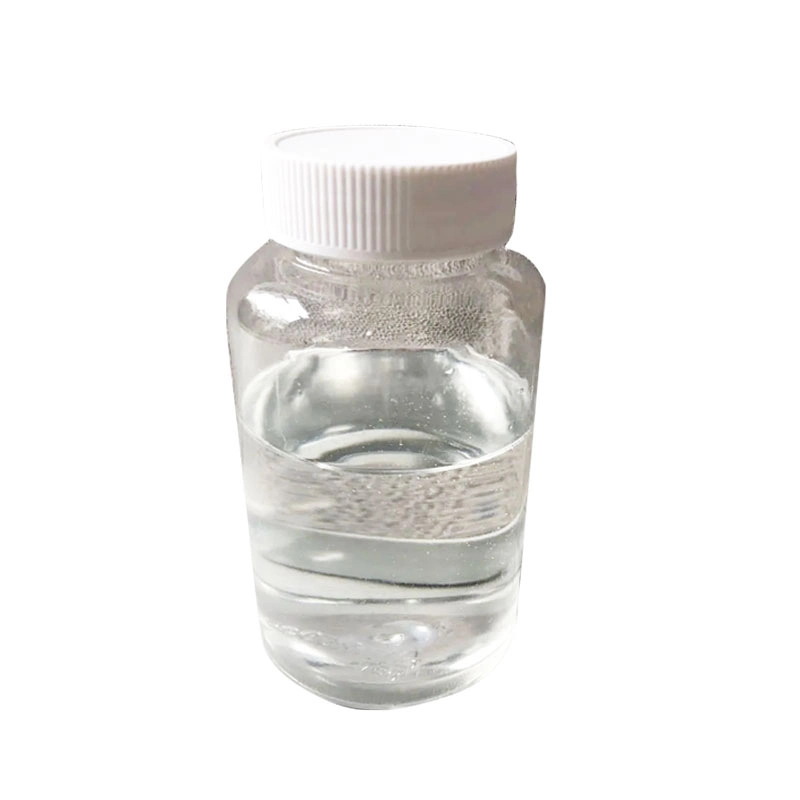
Products Description
N,N-Dimethylacetamide (DMAC) is a highly polar aprotic solvent characterized by a slight ammonia-like odor and excellent dissolving capacity. It exhibits broad solubility and is miscible with water and various organic solvents, including aromatic hydrocarbons, esters, ketones, alcohols, ethers, benzene, and chloroform. It can also promote the activation of molecular compounds. Due to its excellent solvent properties, DMAC is widely used as both a solvent and a catalyst in various industrial applications.
As a solvent, DMAC offers a high boiling point, high flash point, and excellent thermal and chemical stability. It is commonly used in polyacrylonitrile spinning, as well as in the processing of synthetic and natural resins, vinyl formate resins, vinylpyridine copolymers, and aromatic carboxylic acids.
As a catalyst, DMAC is applied in various chemical reactions, including the thermal conversion of urea, the synthesis of cyanides from sodium halides and metal cyanides, and reactions involving alkyl acetylenes, organic halides, and isocyanates. In addition, DMAC has a wide range of other applications, such as an electrolytic solvent, a solvent for photographic couplers, a paint remover, and a raw material for organic synthesis, pesticides, and pharmaceuticals. It is also employed in the extraction, separation, and distillation of styrene from C8 hydrocarbon fractions.
Chemical Properties
Melting point | -20 °C (lit.) |
Boiling point | 164.5-166 °C (lit.) |
density | 0.937 g/mL at 25 °C (lit.) |
vapor density | 3.89 (vs air) |
vapor pressure | 40 mm Hg ( 19.4 °C) |
refractive index | n20/D |
Fp | 158 °F |
storage temp. | Store below +30°C. |
solubility | >1000g/l soluble |
form | Liquid |
pka | -0.41±0.70(Predicted) |
color | Colorless to yellowish |
PH | 4 (200g/l, H2O, 20℃) |
Relative polarity | 6.3 |
Odor | Faint ammonia odor |
PH Range | 4 at 200 g/l at 20 °C |
Odor Threshold | 0.76ppm |
explosive limit | 1.7-11.5%(V) |
Water Solubility | miscible |
λmax | λ: 270 nm Amax: 1.00 |
Merck | 14,3227 |
BRN | 1737614 |
Exposure limits | NIOSH REL: TWA 10 ppm (35 mg/m3), IDLH 300 ppm; OSHA PEL: TWA 10 ppm; ACGIH TLV: TWA 10 ppm (adopted). |
Dielectric constant | 37.8(25℃) |
Stability: | Stable. Combustible. Incompatible with strong oxidizing agents. |
InChIKey | FXHOOIRPVKKKFG-UHFFFAOYSA-N |
LogP | -0.77 at 25℃ |
CAS DataBase Reference | 127-19-5(CAS DataBase Reference) |
NIST Chemistry Reference | Acetamide, N,N-dimethyl-(127-19-5) |
IARC | 2B (Vol. 123) 2020 |
EPA Substance Registry System | Dimethylacetamide (127-19-5) |
Safety Information
Hazard Codes | T |
Risk Statements | 11-20/22-61-20/21-36 |
Safety Statements | 16-24-53-45-36-28-26 |
OEB | A |
OEL | TWA: 10 ppm (35 mg/m3) [skin] |
RTECS | AB7700000 |
F | 3-10 |
Autoignition Temperature | 914 °F |
HS Code | 29241900 |
Hazardous Substances Data | 127-19-5(Hazardous Substances Data) |
Toxicity | LD50 orally in rats: 5.4 ml/kg (Bartsch) |
IDLA | 300 ppm |
Product Applications
Propanols are widely utilized as solvents in coatings, antifreeze formulations, household and personal care products, as well as chemical intermediates in the production of esters, amines, and various natural derivatives. In particular, 1-propanol serves as an effective solvent in a broad range of applications, including printing inks, paints, cosmetics, pesticides, cellulose esters, and insecticides.
Furthermore, 1-propanol is commercially employed in the manufacture of glycol ethers, which possess dual functional properties that provide excellent solvency, chemical stability, and compatibility with water.


