
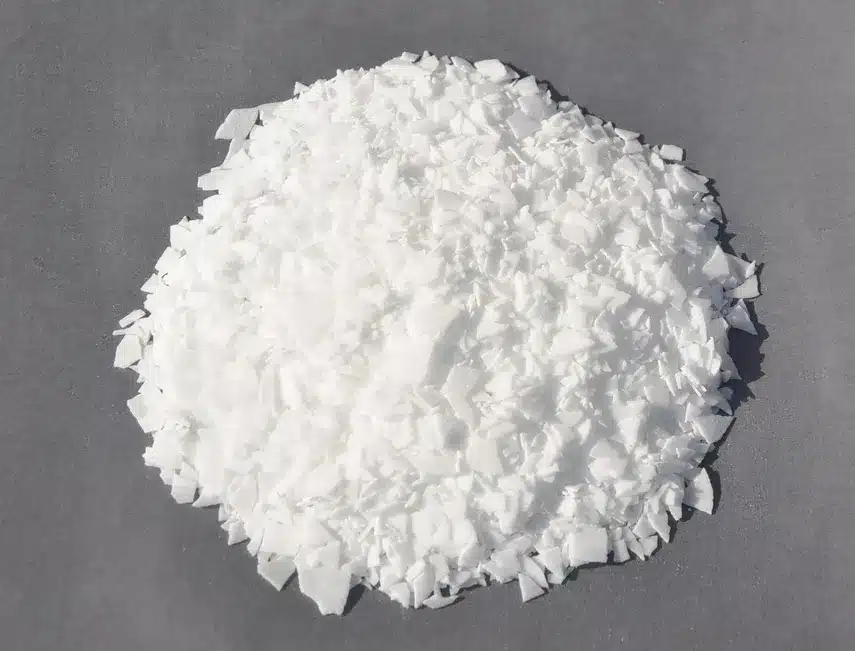
Products Description
Phthalic anhydride (PA) is an important industrial chemical raw material with a wide range of applications. Its primary use is in the production of phthalate plasticizers, followed by its application in the manufacture of alkyd and amino resin coatings. In addition, phthalic anhydride is widely used in the production of unsaturated polyester resins and in the dye industry as a key raw material for the synthesis of anthraquinone compounds.
Chemical Properties
Melting point | 131-134 °C(lit.) |
Boiling point | 284 °C(lit.) |
density | 1,53 g/cm3 |
vapor density | 5.1 (vs air) |
vapor pressure | <0.01 mm Hg ( 20 °C) |
refractive index | 1.4500 (estimate) |
Fp | 152 °C |
storage temp. | Store below +30°C. |
solubility | 6g/l (slow decomposition) |
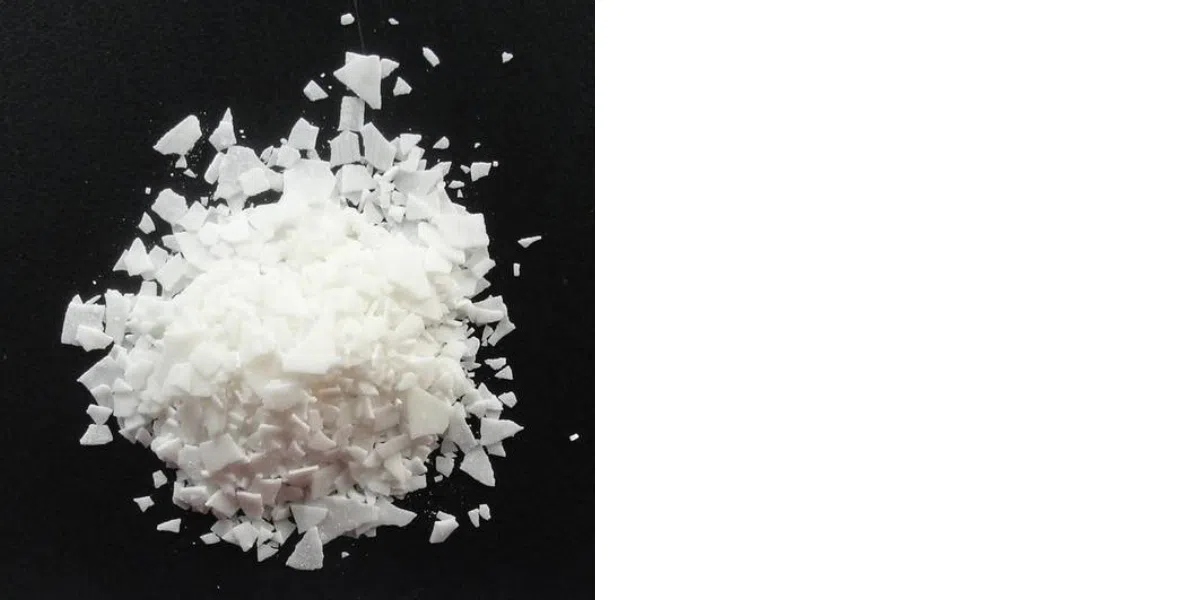
form | Flaky Crystals |
pka | 2.97[at 20 ℃] |
color | White |
PH | 2 (6g/l, H2O, 20℃) |
Odor | Characteristic choking odor |
PH Range | 2 at 6 g/l at 20 °C |
explosive limit | 1.7-10.5%(V) |
Water Solubility | 6 g/L (20 ºC) |
Sensitive | Moisture Sensitive |
Merck | 14,7372 |
BRN | 118515 |
Henry's Law Constant | 6.29 at 20 °C (approximate - calculated from water solubility and vapor pressure) |
Exposure limits | NIOSH REL: TWA 6 mg/m3 (1 ppm), IDLH 60 mg/m3; OSHA PEL: TWA 12 mg/m3 (2 ppm); ACGIH TLV: TWA 1 ppm (adopted). |
Stability: | Stable. Combustible. Incompatible with strong oxidizing agents, strong bases, moisture, strong acids. Dust may form an explosive mixture with air. |
LogP | 2.07 at 20℃ |
CAS DataBase Reference | 85-44-9(CAS DataBase Reference) |
NIST Chemistry Reference | Phthalic anhydride(85-44-9) |
EPA Substance Registry System | Phthalic anhydride (85-44-9) |
Safety Information
Hazard Codes | Xn |
Risk Statements | 22-37/38-41-42/43 |
Safety Statements | 23-24/25-26-37/39-46-22 |
RIDADR | 2214 |
WGK Germany | 1 |
RTECS | TI3150000 |
F | 10-21 |
Autoignition Temperature | 580 °C |
TSCA | Yes |
HazardClass | 8 |
PackingGroup | III |
HS Code | 29173500 |
Hazardous Substances Data | 85-44-9(Hazardous Substances Data) |
Toxicity | LD50 orally in Rabbit: 1530 mg/kg LD50 dermal Rabbit > 3160 mg/kg |
IDLA | 60 mg/m3 |
Product Applications
Phthalic anhydride is an important intermediate in the production of various agrochemicals, including the fungicide fenfoside, the insecticide imidophos, and the herbicide bentazone.
As one of the most significant raw materials in the organic chemical industry, phthalic anhydride is widely used in the manufacture of various derivatives, including dibutyl phthalate, dioctyl phthalate, and diisobutyl phthalate, which serve as plasticizers for PVC and other polymers. It is also an essential raw material for producing unsaturated polyester resins, alkyd resins, dyes, pigments, and various coatings. In addition, it has applications in food additives and pharmaceutical products, such as phenolphthalein, a laxative, as well as in agrochemicals and other fine chemicals, including phosmet, bentazone, and sodium saccharin.


