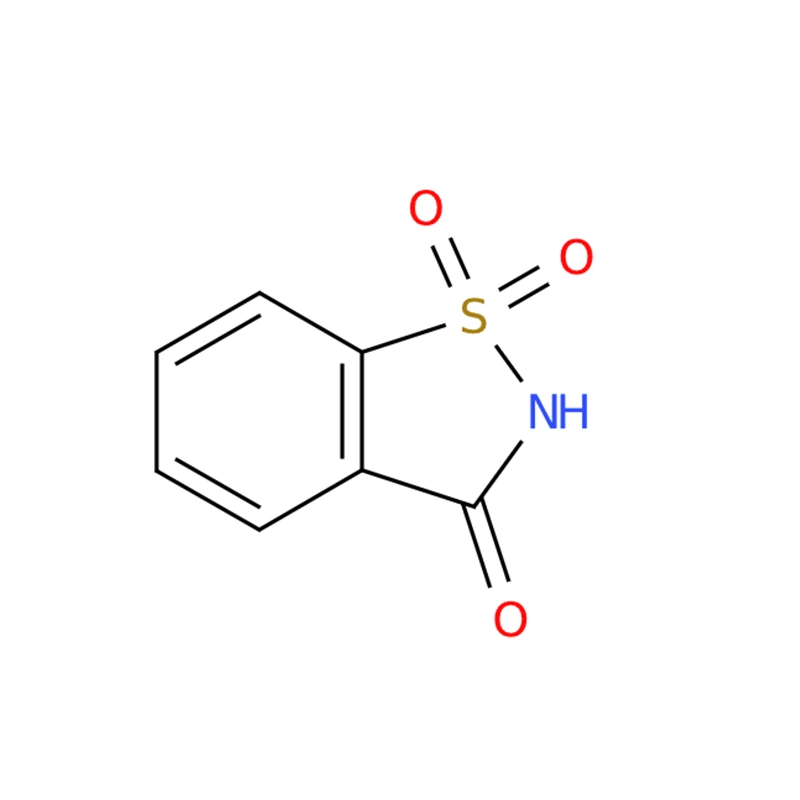
Saccharin CAS#81-07-2 Product Description
Pure saccharin is a non-nutritive, zero-calorie artificial sweetener that provides a pronounced sweet taste without supplying energy or nutritional value. It is generally used as an alternative to conventional sugar in a wide range of food and beverage applications, particularly in products designed for sugar reduction or calorie control. Due to its high sweetness intensity, saccharin can deliver the desired sweetness in relatively small quantities, making it a practical ingredient for formulating sugar-free and reduced-calorie products.
As a food additive, saccharin is primarily valued for its ability to enhance sweetness without significantly affecting the nutritional or caloric content of the final product. It is therefore widely incorporated into various sugar-free foods, beverages, and other consumer products to meet the growing demand for low-sugar alternatives. In commercial applications, saccharin is commonly supplied in the form of its sodium salt, known as sodium saccharin (saccharin sodium), which offers favorable water solubility and convenient handling during food formulation and processing.
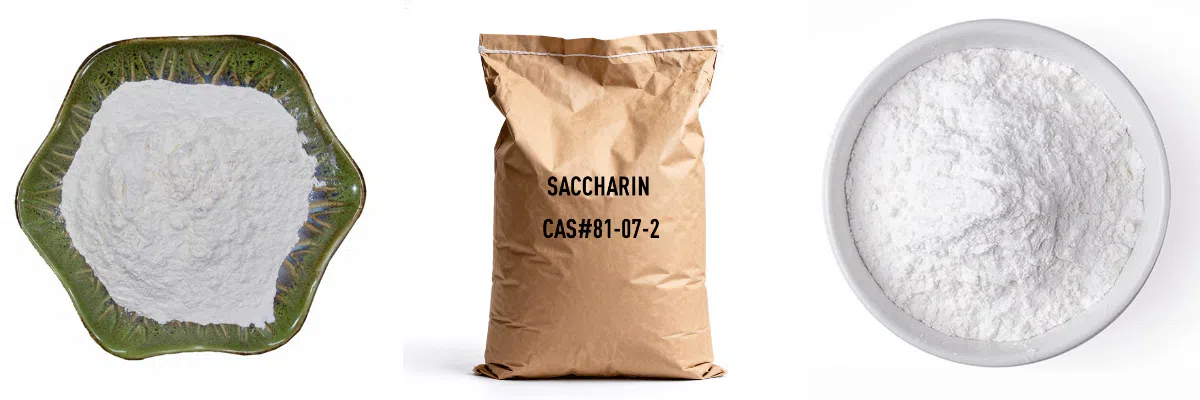
Saccharin CAS#81-07-2 Chemical Properties
| Melting point | 226-229 °C (lit.) |
| Boiling point | subl |
| Density | 0.828 |
| Vapor pressure | 0Pa at 25℃ |
| Refractive index | 1.5500 (estimate) |
| Storage temp | Store below +30°C. |
| Solubility | acetone: soluble1g in 12mL(lit.) |
| Pka | 11.68(at 18℃) |
| Form | Crystals or Crystalline Powder |
| Color | White |
| Odor | odorless |
| Water Solubility | 3.3 g/L (20 ºC) |
| Merck | 148311 |
| BRN | 6888 |
| Stability | Stable. Incompatible with strong oxidizing agents. |
| InChIKey | CVHZOJJKTDOEJC-UHFFFAOYSA-N |
| LogP | -0.024 at 25℃ |
| CAS DataBase Reference | 81-07-2(CAS DataBase Reference) |
| IARC | 3 (Vol. Sup 7, 73) 1999 |
| NIST Chemistry Reference | Saccharin(81-07-2) |
| EPA Substance Registry System | Saccharin (81-07-2) |
Saccharin CAS#81-07-2 Safety Information
| Risk Statements | 40-62-63-68 |
| Safety Statements | 24/25 |
| RIDADR | UN 3077 9/PG 3 |
| WGK Germany | 2 |
| RTECS | DE4200000 |
| TSCA | Yes |
| HazardClass | IRRITANT |
| HS Code | 29251100 |
| Hazardous Substances Data | 81-07-2(Hazardous Substances Data) |
| Toxicity | LD50 oral in mouse: 17gm/kg |
Saccharin CAS#81-07-2 Product Application
Saccharin, also known as o-benzoylsulfonyl imide, has a wide range of applications in the chemical, agricultural, food, and pharmaceutical industries. In agrochemical manufacturing, it serves as an important synthetic intermediate in the preparation of various fungicides and herbicides, including allylthiazole, metsulfuron-methyl, bensulfuron-methyl, ethametsulfuron-methyl, and chlorimuron-methyl. Its chemical structure makes it a useful starting material for the synthesis of different pesticide-related compounds and other functional chemical products.
In the food industry, saccharin is widely recognized as a non-nutritive artificial sweetener and is commonly used in the form of its sodium or ammonium salts. Due to its high sweetness intensity and relatively slow dissolution in the mouth, it is particularly suitable for applications requiring prolonged sweetness, such as chewing gum and other sugar-free confectionery products. According to the cited Japanese food additive standard from 1998, its maximum permitted usage level in chewing gum was 0.05 g/kg.
Furthermore, saccharin is utilized in the production of pesticide intermediates and sodium saccharin, as well as in specialized formulations designed to enhance palatability by providing a sweet taste for mammals. Beyond these industrial and food-related applications, saccharin also has certain biochemical and analytical uses. It can act as an inhibitor of specific enzymes, including phosphotransferases and phosphohydrolases, and has been employed in analytical chemistry applications, such as methods involving thallium detection and determination. These diverse uses highlight its importance as a multifunctional chemical raw material across several industrial and research fields.