
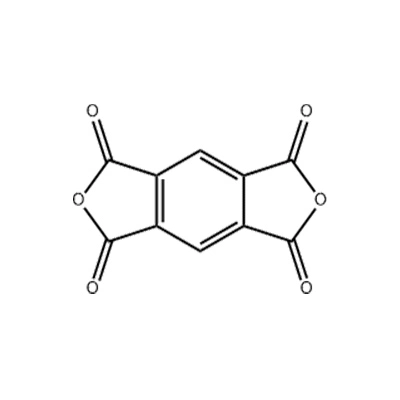
Products Description
Pyromellitic dianhydride (PMDA) is primarily used as a key raw material in the synthesis of polyimides. Owing to their exceptional thermal stability, resistance to acids and alkalis, and outstanding mechanical, electrical, and dimensional stability properties, polyimides are widely utilized in high-tech industries such as aviation, aerospace, microelectronics, and atomic energy, where materials must meet stringent performance requirements.
Product Name: | Pyromellitic Dianhydride |
Synonyms: | 1,2,4,5-Benzenetetracarboxylic 1,2:4,5-dianhydride;1,2,4,5benzenetetracarboxylic1,2:4,5dianhydride;1,2,4,5-benzenetetracarboxylic1,2:4,5-dianhydride;1,2,4,5-Benzenetetracrboxylicdianhydride;pyromelliticacidanhydride;pyromelliticaciddianhydride;Pyromelliticanhydride;BENZENE-1,2,4,5-TETRACARBOXYLIC 1,2,4,5-DIANHYDRIDE |
CAS: | 89-32-7 |
MF: | C10H2O6 |
MW: | 218.12 |
EINECS: | 201-898-9 |
Product Categories: | fine chemicals;Organics;fine chemicals, specialty chemicals, intermediates, electronic chemical, organic synthesis;fine chemicals, specialty chemicals, intermediates, electronic chemical, organic synthesis, functional materials;Intermediates of Dyes and Pigments;Benzene derivates;Aromatic Tetracarboxylic Dianhydrides (for High-Performance Polymer Research);Functional Materials;Reagent for High-Performance Polymer Research |
Mol File: | 89-32-7.mol |
Chemical Properties
Melting point | 283-286 °C(lit.) |
Boiling point | 397-400 °C(lit.) |
density | 1,68 g/cm3 |
bulk density | 400-600kg/m3 |
vapor pressure | 0Pa at 25℃ |
refractive index | 1.6000 (estimate) |
Fp | 380 °C |
storage temp. | 2-30°C |
solubility | Soluble in dimethyl sulfoxide, acetone, chloroform, ethyl ether, n-hexane and benzene. |
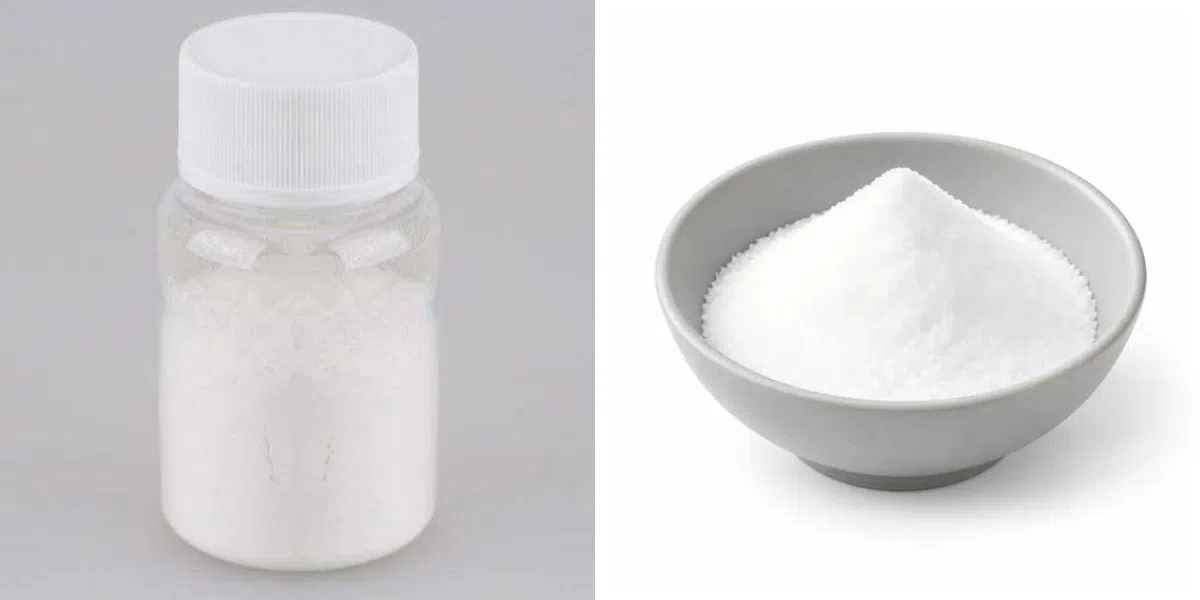
form | Fine Powder |
pka | 5.45[at 20 ℃] |
color | White to pale yellow |
Water Solubility | decomposes |
Sensitive | Moisture Sensitive |
BRN | 213583 |
Henry's Law Constant | 1.3×10³ mol/(m3Pa) at 25℃, HSDB (2015) |
InChI | 1S/C10H2O6/c11-7-3-1-4-6(10(14)16-8(4)12)2-5(3)9(13)15-7/h1-2H |
InChIKey | ANSXAPJVJOKRDJ-UHFFFAOYSA-N |
SMILES | O=C1OC(=O)c2cc3C(=O)OC(=O)c3cc12 |
LogP | -2.03 at 21.5℃ |
CAS DataBase Reference | 89-32-7(CAS DataBase Reference) |
NIST Chemistry Reference | 1,2,4,5-Benzenetetracarboxylic anhydride(89-32-7) |
EPA Substance Registry System | 1H,3H-Benzo[1,2-c:4,5-c']difuran-1,3,5,7-tetrone (89-32-7) |
Safety Information
Hazard Codes | Xn |
Risk Statements | 41-42/43 |
Safety Statements | 22-24-26-37/39 |
WGK Germany | 1 |
RTECS | DB9300000 |
F | 10-21 |
Autoignition Temperature | 630°C |
TSCA | TSCA listed |
HS Code | 29173980 |
Storage Class | 11 - Combustible Solids |
Hazard Classifications | Eye Dam. 1 |
Hazardous Substances Data | 89-32-7(Hazardous Substances Data) |
Product Applications
Pyromellitic dianhydride (PMDA) is an important raw material in organic synthesis and serves as a fundamental building block for the development of advanced chemical materials and high-value-added fine chemicals. Its primary application is in the production of polyimide monomers. It is also used as a curing agent for epoxy resins, a crosslinking agent for polyester resins, and a raw material in the manufacture of phthalocyanine blue dyes and various important derivatives, making it a versatile industrial chemical.
Pyromellitic dianhydride, also known as homoanhydride, possesses a unique molecular structure that makes it suitable for producing materials with excellent heat resistance, electrical insulation, and chemical stability. Its most significant application is as a monomer for polyimide production. Polyimide plastics are synthesized through reactions with aromatic diamines. However, the production process requires PMDA of exceptionally high purity, typically exceeding 99%, to ensure the quality and performance of the resulting materials.


