
Products Description
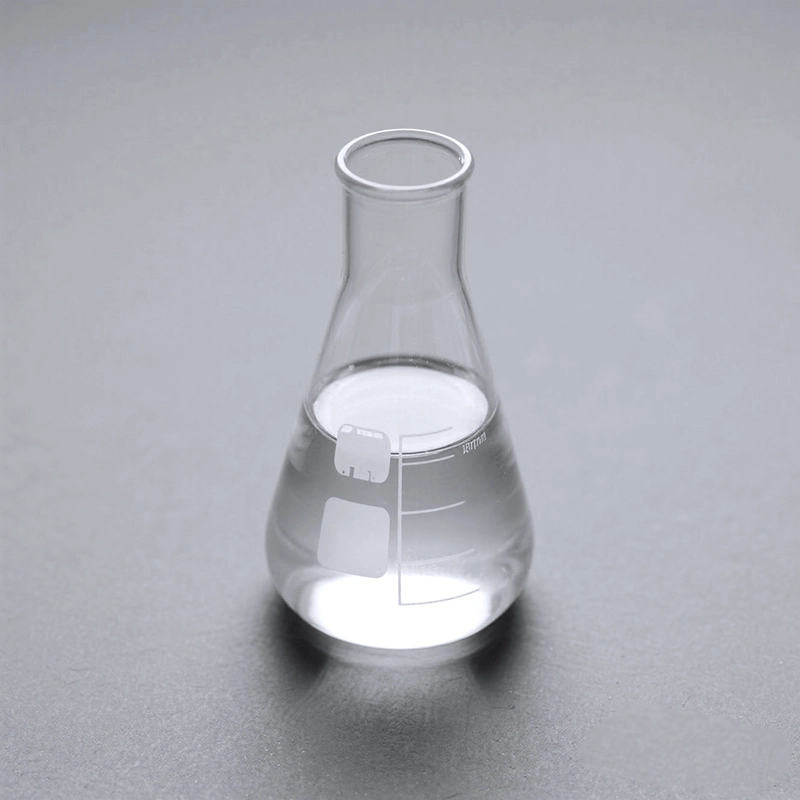
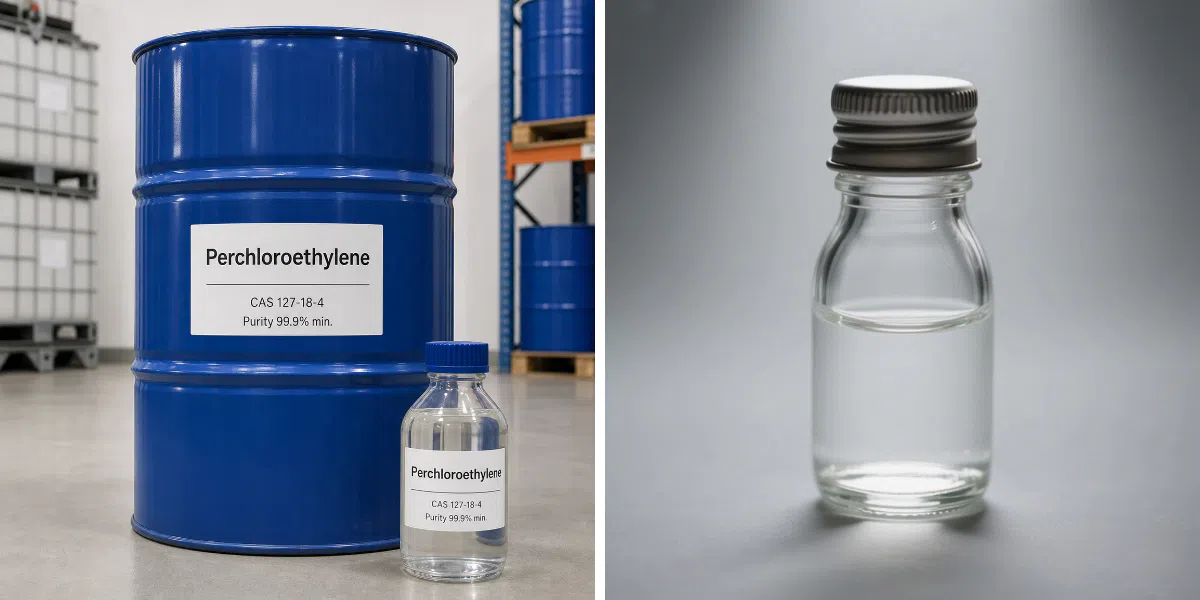
Tetrachloroethylene (chemical formula: C₂Cl₄) is a chlorinated hydrocarbon widely used as an industrial solvent and in certain specialized cooling and electrical applications. It is a colorless, volatile, non-flammable liquid with an ether-like odor. Most commercial tetrachloroethylene is produced through the high-temperature chlorinolysis of light hydrocarbons.
Tetrachloroethylene is an effective solvent for a wide range of organic substances. Due to its volatility, chemical stability, and non-flammable nature, it has been extensively used in dry-cleaning operations. It is also employed in the degreasing of metal components in the automotive and other metalworking industries, sometimes in combination with other chlorinated solvents. Additionally, it has specialized applications in neutrino detectors. However, tetrachloroethylene presents potential health risks and is classified as a carcinogenic substance, so appropriate exposure controls and safety precautions are essential.
Chemical Properties
Melting point | -22 °C (lit.) |
Boiling point | 121 °C (lit.) |
density | 1.623 g/mL at 25 °C (lit.) |
vapor density | 5.83 (vs air) |
vapor pressure | 13 mm Hg ( 20 °C) |
refractive index | n20/D |
Fp | 120-121°C |
storage temp. | Store at +2°C to +25°C. |
solubility | water: soluble0.15g/L at 25°C |
form | Liquid |
color | APHA: ≤10 |
Odor | chloroform-like odor |
Odor Threshold | 0.77ppm |
Water Solubility | Miscible with alcohol, ether, chloroform, benzene and hexane. Slightly miscible with water. |
FreezingPoint | -22.0℃ |
λmax | λ: 290 nm Amax: 1.00 |
Merck | 14,9190 |
BRN | 1361721 |
Henry's Law Constant | 4.97 at 1.8 °C, 15.5 at 21.6 °C, 34.2 at 40.0 °C, 47.0 at 50 °C, 68.9 at 60 °C, 117.0 at 70 °C (EPICS-GC, Shimotori and Arnold, 2003) |
Exposure limits | TLV-TWA 50 ppm (~325 mg/m3) (ACGIH), 100 ppm (MSHA and OSHA); TLV-STEL 200 ppm (ACGIH); carcinogenicity: Animal Limited Evidence. |
Dielectric constant | 2.5(21℃) |
Stability: | Stable. Incompatible with strong oxidizing agents, alkali metals, aluminium, strong bases. |
LogP | 2.53 at 20℃ |
CAS DataBase Reference | 127-18-4(CAS DataBase Reference) |
NIST Chemistry Reference | Tetrachloroethylene(127-18-4) |
IARC | 2A (Vol. Sup 7, 63, 106) 2014 |
EPA Substance Registry System | Tetrachloroethylene (127-18-4) |
Safety Information
Hazard Codes | Xn,N,T,F |
Risk Statements | 40-51/53-23/25-11-39/23/24/25-23/24/25 |
Safety Statements | 23-36/37-61-45-24-16-7 |
RIDADR | UN 1897 6.1/PG 3 |
WGK Germany | 3 |
RTECS | KX3850000 |
Autoignition Temperature | 260℃ |
TSCA | Yes |
HazardClass | 6.1 |
PackingGroup | III |
HS Code | 29032300 |
Hazardous Substances Data | 127-18-4(Hazardous Substances Data) |
Toxicity | LD50 orally in mice: 8.85 g/kg (Dybing); LC for mice in air: 5925 ppm (Lazarew) |
IDLA | 150 ppm |
Product Applications
Tetrachloroethylene is widely used as an industrial solvent, particularly in dry-cleaning operations and metal degreasing processes. Due to its extensive industrial applications, it is frequently detected as a groundwater contaminant. It is also recognized as a potential human carcinogen and is relatively resistant to biodegradation, resulting in its persistence in the environment. As a result, tetrachloroethylene is increasingly recognized as a contaminant of emerging concern (CEC), raising concerns about its potential impacts on environmental quality and human health.


