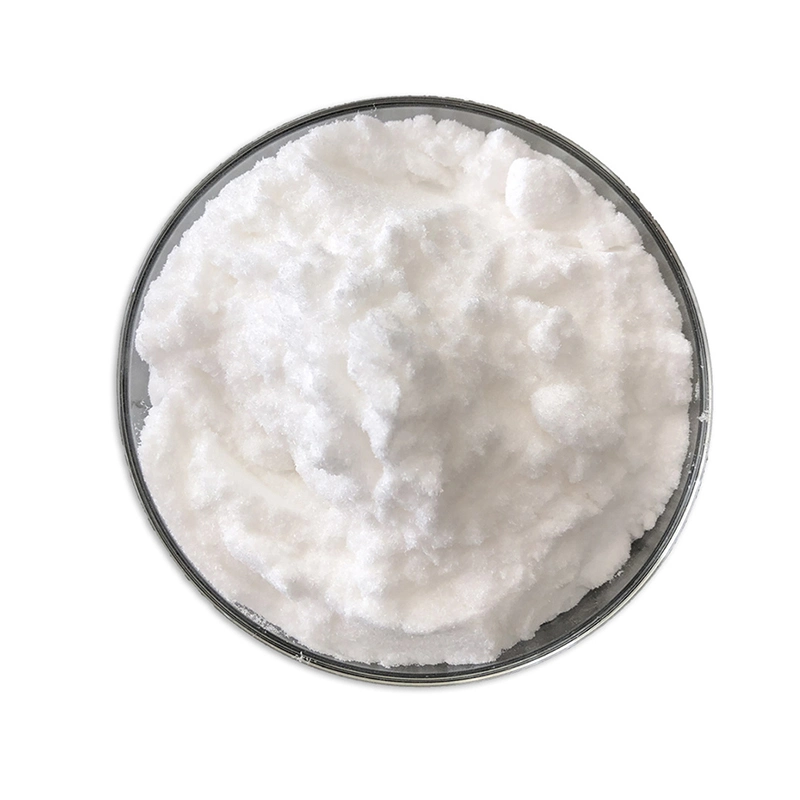
Cholesterol is a waxy, lipid molecule found in all body cells. Primarily synthesized by the liver, it can also be derived from dietary sources. This compound is critical to human health, serving as a key building block for hormone synthesis, vitamin D formation, and bile acid production.
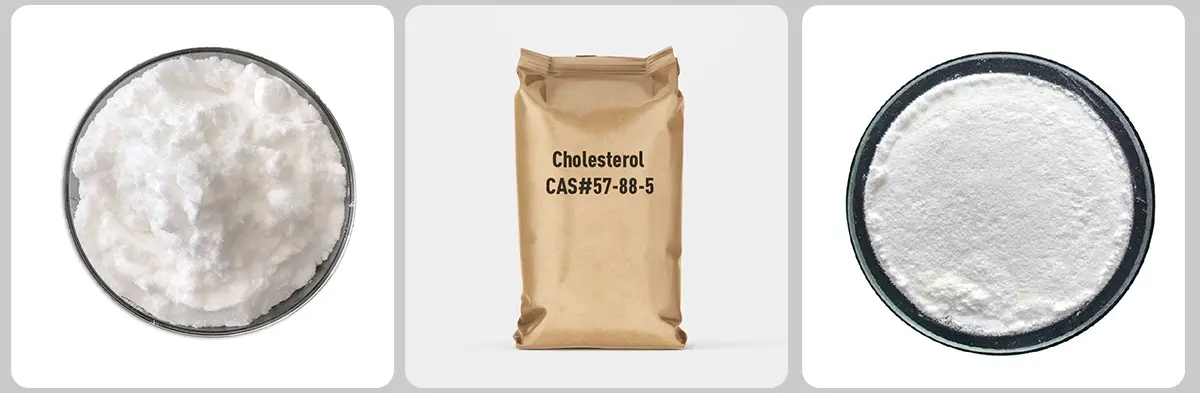
Cholesterol Chemical Propertie
| Melting point | 148-150 °C |
| alpha | -36 º (c=2, dioxane) |
| Boiling point | 360 °C |
| density | 1.06 |
| refractive index | 1.5250 (estimate) |
| Fp | 250 °C |
| storage temp. | -20°C |
| solubility | H2O: 0.002 mg/mL |
| form | powder |
| pka | 15.03±0.70(Predicted) |
| color | white |
| Specific Gravity | 1.067 |
| Odor | wh. or faintly yel. pearly granules or crystals, almost odorless |
| biological source | synthetic |
| Optical Rotation | -40.201°(C=0.01g/ml CHCL3) |
| Water Solubility | negligible |
| Merck | 14,2201 |
| BRN | 1915888 |
| Dielectric constant | 2.9(Ambient) |
| InChIKey | HVYWMOMLDIMFJA-DPAQBDIFSA-N |
| LogP | 9.619 (est) |
| CAS DataBase Reference | 57-88-5(CAS DataBase Reference) |
| NIST Chemistry Reference | Cholesterol(57-88-5) |
| IARC | 3 (Vol. 31, Sup 7) 1987 |
| EPA Substance Registry System | Cholesterol (57-88-5) |
Safety Information
| Hazard Codes | Xn,Xi |
| Risk Statements | 10-48/20/22-40-38-22-36/37/38-67-36/38-20-63 |
| Safety Statements | 24/25-22-36/37-36-26 |
| RIDADR | UN 1170 3/PG 3 |
| WGK Germany | 1 |
| RTECS | FZ8400000 |
| TSCA | Yes |
| HS Code | 2906 13 10 |
| HazardClass | IRRITANT |
| Hazardous Substances Data | 57-88-5(Hazardous Substances Data) |
| Toxicity | Present in all parts of the animal body; concentrated in spinal cord, brain, skin secretions, and gallstones. An unsaturated, unsaponifiable alcohol (m.p. 149℃). It is synthesized in the body from ethanoate units; its metabolism is regulated by a specific set of enzymes. It is the parent compound of many other steroids and its presence in high concentrations in the blood is suspected as being a contributory factor in cardiovascular disease. |

Cholesterol (CAS# 57-88-5) Product Applications:
Applied as a biochemical research feedstock, notably for brain phospholipid studies, cholesterol flocculation assays, vitamin D creation, and hormone biosynthesis.
Functioning as a biochemical reagent and stabilizing emulsifier across diverse industrial manufacturing workflows.
Implemented in synthesizing synthetic bezoars and endocrine pharmaceutical treatments, while additionally acting as an active formulation emulsifying agent.