
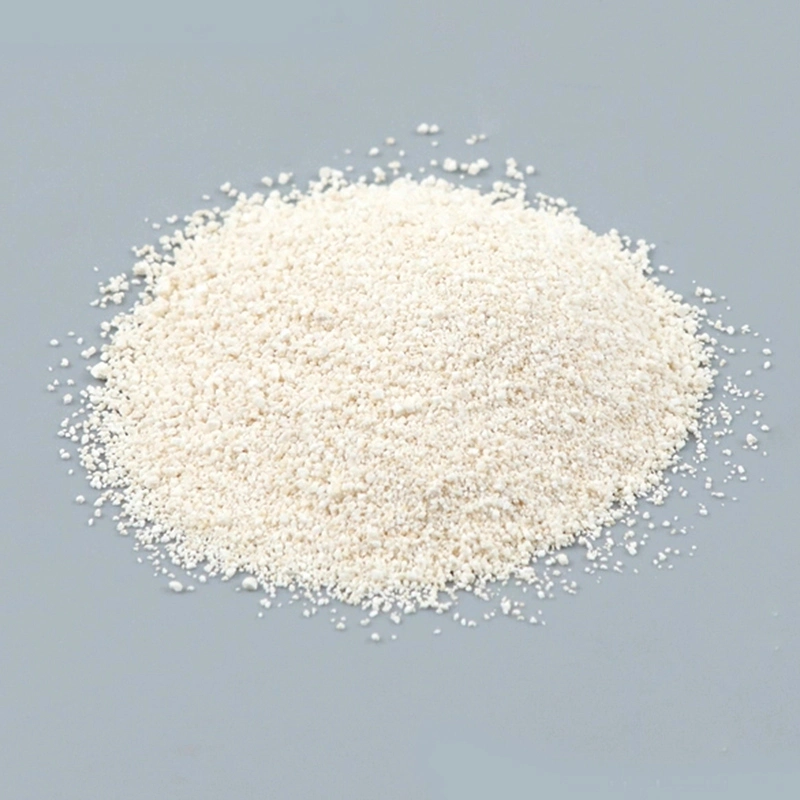
L-Lysine is an indispensable amino acid essential for both human and animal physiology, serving a fundamental role in protein synthesis and developmental growth. By stimulating carnitine biosynthesis, it aids in regulating cholesterol levels while simultaneously enhancing the systemic absorption of key minerals, including calcium, zinc, and iron. In sports nutrition, L-Lysine is widely used as a supplement to foster lean muscle development and maintain overall musculoskeletal integrity. From an antiviral perspective, it competitively antagonizes arginine during viral replication, thereby mitigating the frequency and severity of herpes simplex virus (HSV) infections. Clinical evidence also suggests that L-Lysine supplementation can effectively relieve chronic anxiety in human subjects. Additionally, it lowers the viscosity of serum albumin formulations, optimizing their rheological properties for injectable applications.
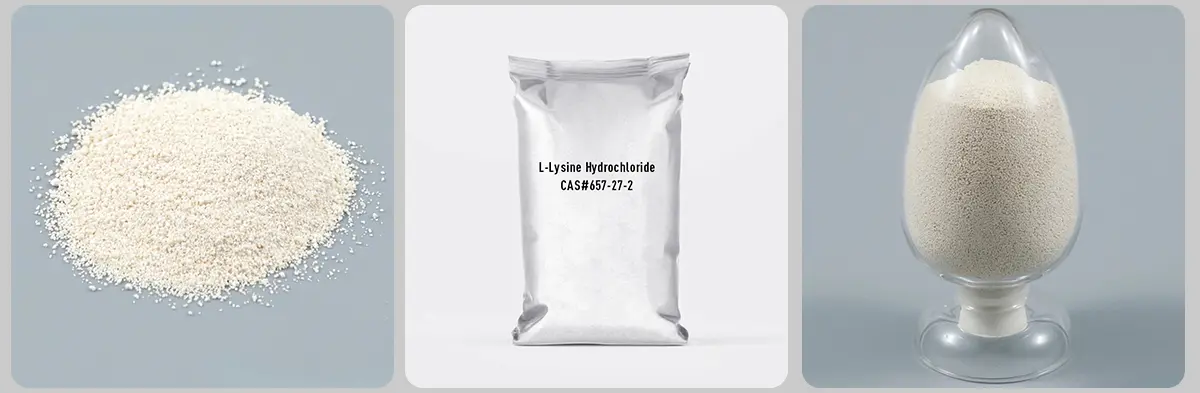
L-Lysine hydrochloride Chemical Properties
| Melting point | 263 °C (dec.)(lit.) |
| Alpha | 21 º (c=8, 6N HCl) |
| Density | 1.28 g/cm3 (20℃) |
| Bulk density | 360kg/m3 |
| Vapor pressure | <1 Pa (20 °C) |
| FEMA | 3847 | L-LYSINE |
| Storage temp | 2-8°C |
| Solubility | H2O: 100 mg/mL |
| Form | Powder |
| Color | White to Off-white |
| Odor | Odorless |
| PH | 5.5-6.0 (100g/l, H2O, 20℃) |
| Biological source | Non-animal source |
| Optical Rotation | [α]20/D +20.5±0.5°, c = 5% in 5 M HCl |
| Water Solubility | 65 g/100 mL (20 ºC) |
| λmax | λ: 260 nm Amax: 0.1 λ: 280 nm Amax: 0.1 |
| Merck | 14,5636 |
| BRN | 3563889 |
| Stability | Stable. Incompatible with strong oxidizing agents. |
| LogP | -1.036 (est) |
| CAS DataBase Reference | 657-27-2(CAS DataBase Reference) |
| EPA Substance Registry System | Lysine hydrochloride (657-27-2) |

L-Lysine hydrochloride is widely employed as a nutritional fortifier across the food and beverage sectors, while also serving as a vital bioavailable source of L-Lysine in animal feed formulations. Beyond these primary applications, it maintains a broad operational footprint across multiple industries, including food processing, functional beverages, pharmaceuticals, agriculture, and animal health.