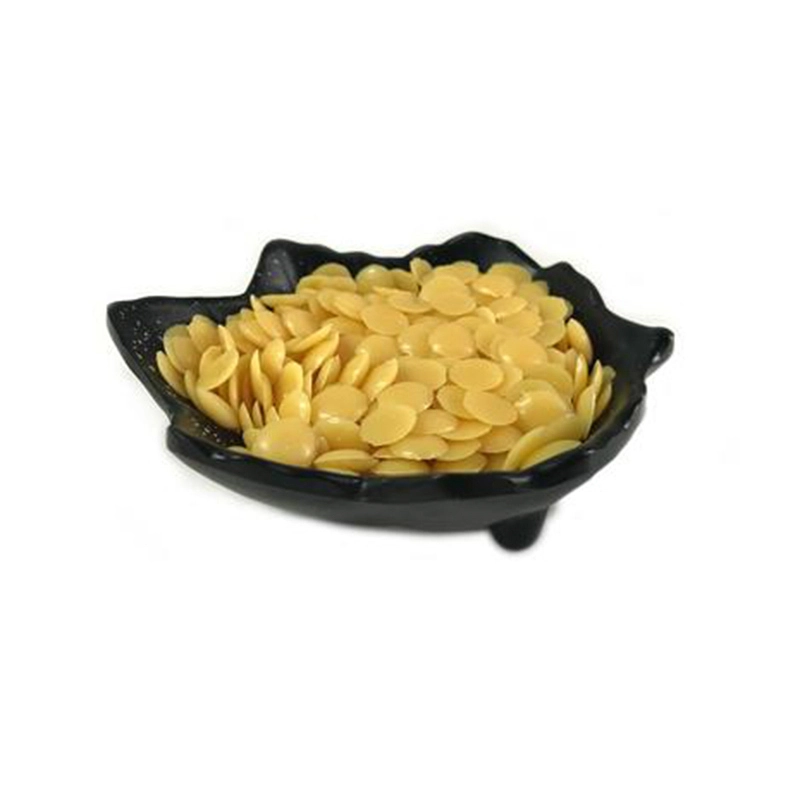
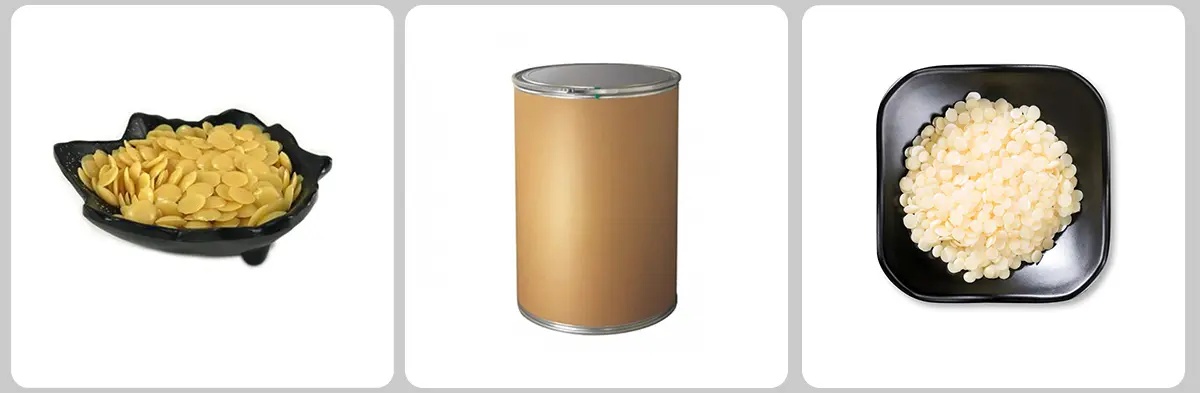
Candelilla wax, frequently referenced as tung oil wax, presents as a pale yellow, glossy, aromatic waxy solid characterized by a hard, brittle plant-based composition. Containing specialized resin constituents, it delivers exceptional stability against thermal fluctuations. Extracted naturally from the candelilla tree, it typically manifests as a yellowish-brown, opaque-to-translucent hard wax block or fine powder. It exhibits a relative density around 0.983, a melting range of 67–68℃, an iodine value of 37, and a refractive index of 1.4555. While insoluble in water and slightly soluble in ethanol, it readily dissolves in chloroform, warm petroleum ether, toluene, and alkaline solutions.
Candelilla Wax Chemical Properties
| English Name | CANDELILLA WAX |
| English Synonyms | CANDELILLA WAX;CANDELILLA WAX, NATURAL;FEMA 3479;EUPHORBIA CERIFERA (CANDELILLA) WAX;CA NDELLILAWAX;Candeliila wax;Candelilla Wax (250 mg);Candelilla Resin E 1 |
| CAS Number | 8006-44-8 |
| Molecular Weight | 0 |
| EINECS Number | 232-347-0 |
| Melting point | 68-72 °C(lit.) |
| Boiling point | >240 °C(lit.) |
| Density | 0.988 g/mL at 25 °C(lit.) |
| FEMA | 3479 | CANDELILLA WAX (WAX FROM STEMS AND BRANCHES OF EUPHORBIA CERIFERA) |
| Refractive index | 1.4555 |
| Flash point | 229 °F |
| Solubility | Soluble in hot ethanol, benzene, and petroleum ether |
| Odor | Odorless |
| Appearance | Yellowish-brown solid |
| Merck | 131,746 |