Products Description
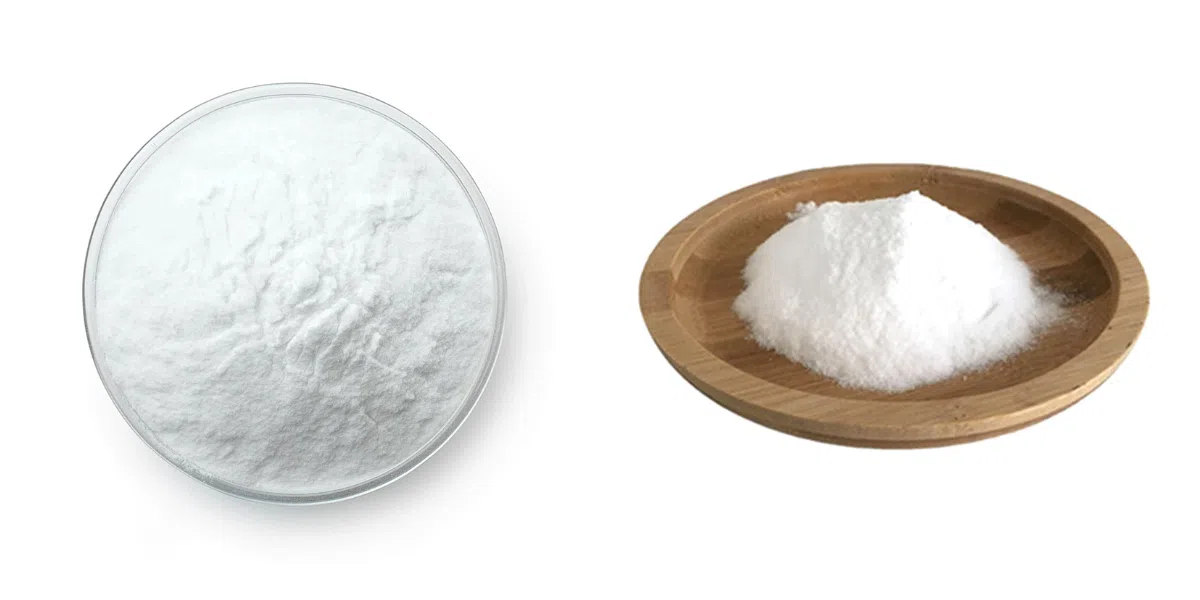
Abscisic Acid (CAS# 21293-29-8) is a naturally occurring isoprenoid plant hormone, which typically appears as a white to pale off-white crystalline powder with no distinct irritating odor. Its solubility profile shows clear selectivity: it dissolves readily in sodium bicarbonate aqueous solution, chloroform, acetone, diethyl ether and ethyl acetate, while being only slightly soluble in water, benzene and petroleum ether.
This compound is highly sensitive to light, and its melting point is recorded at approximately 188°C, with a predicted pKa value of 4.87, making its aqueous solution weakly acidic. For long-term storage, it is recommended to be kept under 2-8°C and protected from direct light, to avoid active ingredient degradation. As a core plant growth regulator, it can effectively trigger plant stress resistance responses, widely applied in agricultural drought resistance, seed dormancy regulation and post-harvest fruit preservation scenarios.
Chemical Properties
| Melting point | 188 °C |
| alpha | D20 +411.1° (c = 1 in ethanol); D20 +426.5° (c = 1 in 0.005N methanolic H2SO4) |
| Boiling point | 327.55°C (rough estimate) |
| density | 1.0583 (rough estimate) |
| refractive index | 410 ° (C=0.2, EtOH) |
| storage temp. | 2-8°C |
| solubility | Chloroform (Slightly), Ethanol (Sparingly), Methanol (Slightly) |
| pka | 4.87±0.33(Predicted) |
| form | Off-white powder |
| color | White to Pale Yellow |
| optical activity | [α]/D 415±10°, c = 0.1 in ethanol |
| Merck | 14,11 |
| BRN | 2698956 |
| Stability: | Light Sensitive |
| InChIKey | JLIDBLDQVAYHNE-WEYXYWBQSA-N |
| LogP | 1.896 (est) |
| CAS DataBase Reference | 21293-29-8(CAS DataBase Reference) |
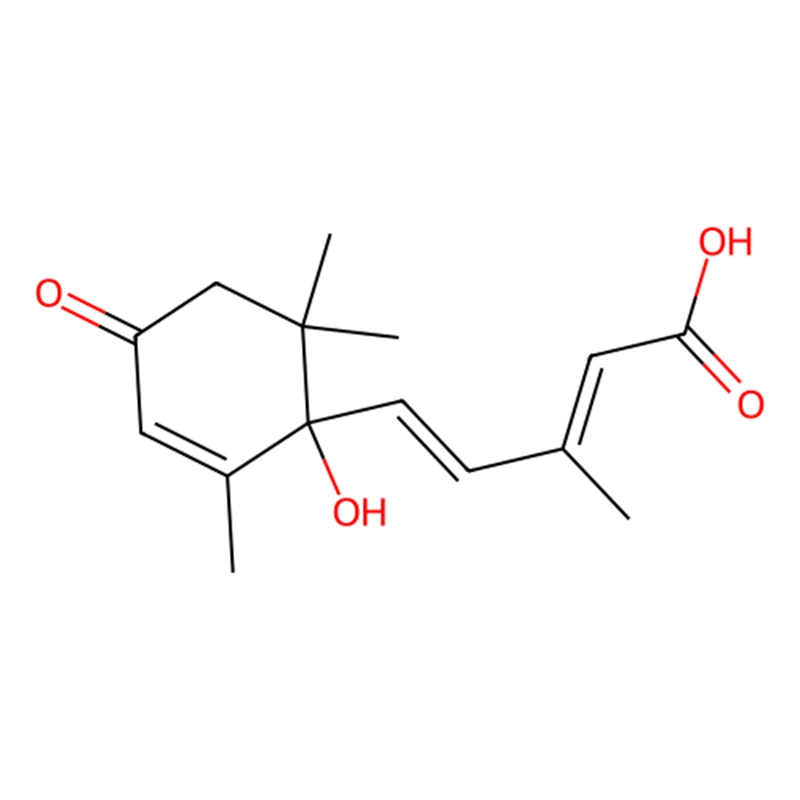
| EPA Substance Registry System | 2,4-Pentadienoic acid, 5-[(1S)-1-hydroxy-2,6,6-trimethyl-4-oxo-2-cyclohexen-1-yl]-3-methyl-, (2Z,4E)- (21293-29-8) |
Safety Information
| Safety Statements | 22-24/25 |
| WGK Germany | 3 |
| RTECS | RZ2475100 |
| F | 8 |
| HS Code | 29189900 |
Product Application
Abscisic acid, a naturally occurring isoprenoid-derived plant hormone, serves as a central regulatory signal that orchestrates a wide spectrum of critical physiological processes across every key stage of plant growth and development. It effectively accelerates controlled leaf abscission, suppresses undesired overgrowth of vegetative tissues, and induces targeted dormancy in seeds and buds to help plants survive unfavorable seasonal conditions. Beyond these core functions, it rapidly triggers stomatal closure on leaf surfaces to reduce excessive water loss, precisely modulates seed embryo maturation and developmental programming, and significantly amplifies plants' innate tolerance to a full suite of harsh environmental stresses including severe drought, freezing low temperatures, and high soil salinity. This versatile bioactive compound has gained widespread, high-value adoption across modern precision agriculture, large-scale ecological vegetation restoration projects, and multiple other specialized industrial and research sectors.