4-Morpholineethanesulfonic Acid CAS#4432-31-9 Product Description
4-Morpholineethanesulfonic acid (MES) is a commonly used organic buffering agent that typically occurs as a white crystalline powder or solid under ambient temperature and pressure conditions. It exhibits good solubility in polar solvents, including water, ethanol, methanol, and acetone, while showing limited to negligible solubility in most non-polar organic solvents. These physical and chemical properties make it suitable for a variety of aqueous formulation and laboratory applications.
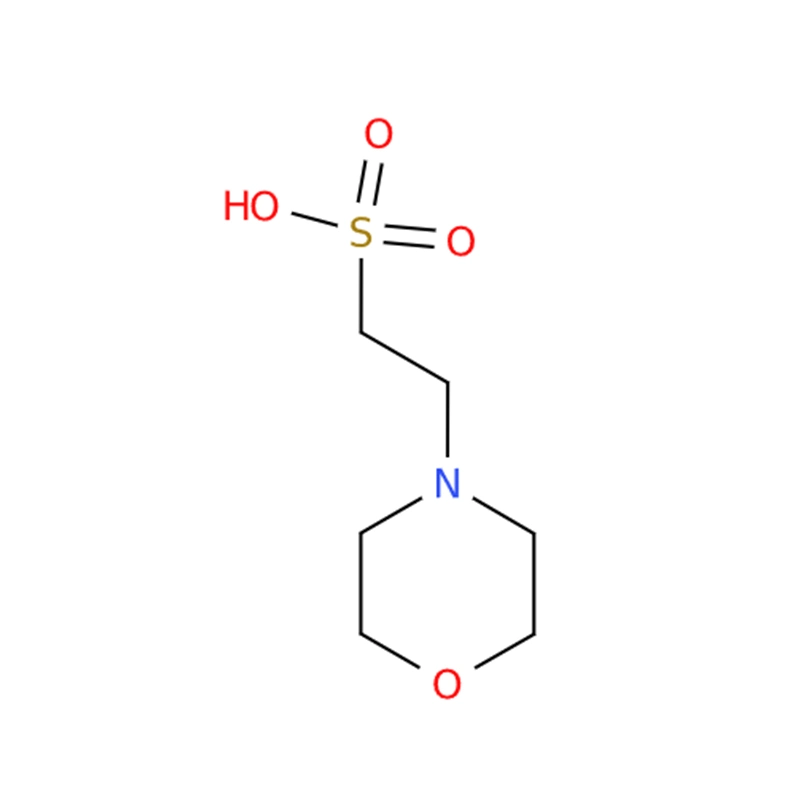
Structurally, MES consists of a morpholine heterocyclic ring linked to an ethanesulfonic acid functional group. The morpholine ring contains both nitrogen and oxygen heteroatoms, contributing to the compound's characteristic chemical structure and stability. The sulfonic acid group is responsible for its hydrophilic nature and plays an important role in its buffering performance in aqueous solutions.
MES is particularly valued for its effective buffering capacity within the mildly acidic to neutral pH range, helping maintain relatively stable pH conditions during chemical and biochemical processes. Its zwitterionic buffering characteristics, favorable water solubility, and relatively low tendency to interfere with many biological reactions make it widely useful in biochemical research, pharmaceutical formulation development, cell culture studies, and various analytical and laboratory procedures. Its suitability for sensitive experimental systems further contributes to its importance as a commonly selected buffer in life science and pharmaceutical applications.
4-Morpholineethanesulfonic Acid CAS#4432-31-9 Chemical Properties
| Melting point | >300 °C(lit.) |
| Boiling point | 102°C |
| Density | 1.208 (estimate) |
| Refractive index | 1.5500 (estimate) |
| Storage temp. | 2-8°C |
| Solubility | H2O: 0.5 M at 20 °C, clear |
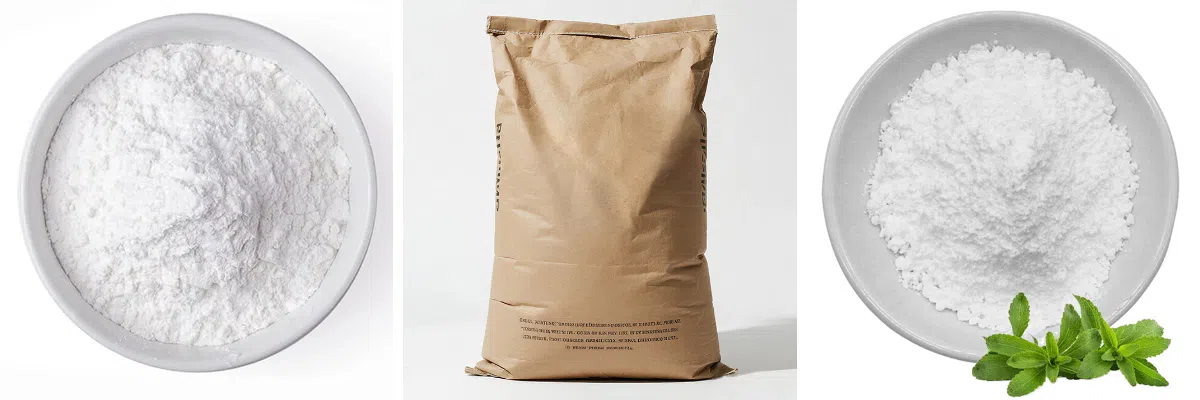
| Form | Powder |
| Pka | pKa at 0.1M ionic: 0°, 6.38; 20°, 6.15; 37°, 5.98; pKa1 1.99; pKa2 6.21; pKa/°C -0.011 |
| Color | White |
| PH | 2.5-4.0 (25℃ in neat) |
| PH Range | 5.5 - 6.7 |
| Water Solubility | 185.2g/L at 20℃ |
| λmax | λ: 260 nm Amax: 0.01 |
| λ: 280 nm Amax: 0.01 | |
| Merck | 135929 |
| BRN | 6350956 |
| Stability | Stable. Incompatible with strong oxidizing agents. |
| InChIKey | SXGZJKUKBWWHRA-UHFFFAOYSA-N |
| LogP | -2.2 at 20℃ |
| CAS DataBase Reference | 4432-31-9(CAS DataBase Reference) |
| EPA Substance Registry System | 4-Morpholineethanesulfonic acid (4432-31-9) |
4-Morpholineethanesulfonic Acid CAS#4432-31-9 Safety Information
| Hazard Codes | Xi |
| Risk Statements | 36/37/38 |
| Safety Statements | 26-36-24/25-22 |
| WGK Germany | 1 |
| RTECS | QE9104530 |
| HS Code | 29349990 |
4-Morpholineethanesulfonic Acid CAS#4432-31-9 Product Application
This product has a wide range of applications across detergent manufacturing, industrial cleaning, mineral processing, and specialty chemical formulations. In the soap and personal cleansing industry, it is commonly employed as an effective calcium soap dispersant in household soap and toilet soap formulations, helping minimize the formation and accumulation of insoluble calcium deposits. It can also serve as a low-phosphorus or phosphorus-free alternative to sodium tripolyphosphate (STPP) in detergent systems, providing useful dispersing and cleaning properties. Additionally, it can be incorporated as a functional component in liquid cleaning products to enhance formulation performance.
In industrial applications, this compound is used as a medium-foaming mineral flotation agent, supporting mineral separation processes. Its dispersing and wetting capabilities also make it suitable for leather degreasing operations and the formulation of dyes, pigments, and pesticide products, where it helps improve ingredient distribution, surface contact, and formulation stability.
Furthermore, the product has applications in the printing and paper recycling industries as a deinking agent. It facilitates the removal of printing inks from recovered paper fibers, contributing to improved ink separation, pulp cleanliness, and the overall efficiency of paper recycling and processing operations.