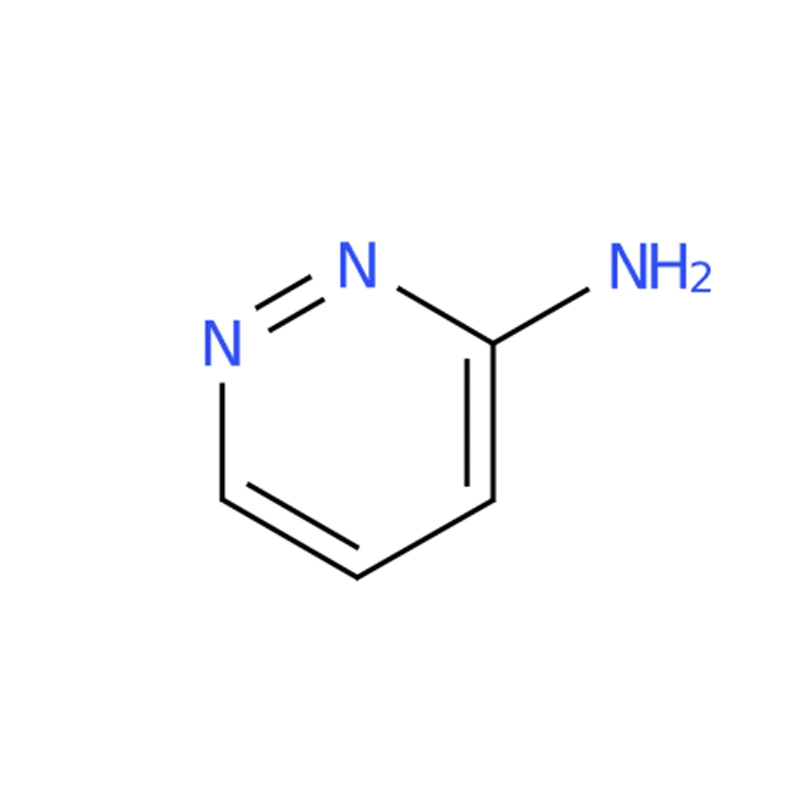
Pyridazin-3-Amine CAS#5469-70-5 Product Description
Pyridazin-3-amine is a heterocyclic organic compound that typically appears as a white to off-white powder under ambient temperature and pressure conditions. Owing to its distinctive molecular structure and versatile chemical reactivity, it has attracted considerable attention as an important pharmaceutical intermediate and a valuable building block in organic synthesis. The pyridazine ring provides a structurally significant framework for the design and development of various pharmaceutical candidates and biologically active molecules. Furthermore, the presence of an amino functional group offers opportunities for a range of chemical transformations, particularly through reactions with suitable acylating agents to produce corresponding amide derivatives. In addition, the two nitrogen atoms incorporated into the heterocyclic ring provide further possibilities for structural modification, including oxidation reactions under appropriate conditions to generate nitrogen oxide derivatives. These structural features and diverse functionalization possibilities make pyridazin-3-amine a useful starting material for the synthesis of structurally diverse heterocyclic compounds and the exploration of new bioactive chemical entities.
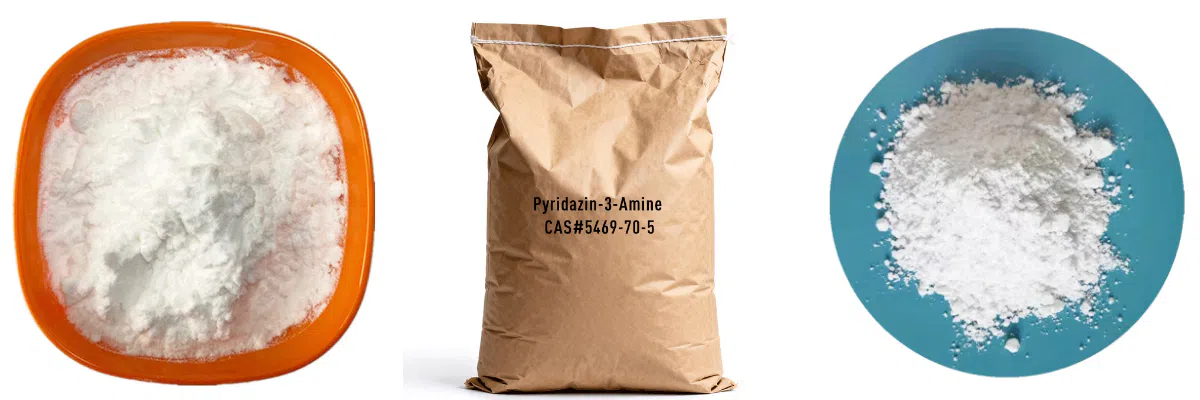
Pyridazin-3-Amine CAS#5469-70-5 Chemical Properties
| Melting point | 171 °C |
| Boiling point | 326.2±15.0 °C(Predicted) |
| density | 1.216±0.06 g/cm3(Predicted) |
| storage temp. | Keep in dark place,Sealed in dry,Room Temperature |
| solubility | soluble in Methanol |
| pka | 4.88±0.10(Predicted) |
| form | Solid |
| color | White to pale yellow |
Pyridazin-3-Amine CAS#5469-70-5 Safety Information
| Hazard Codes | Xi,Xn |
| Risk Statements | 22-36 |
| Safety Statements | 26-24/25 |
| WGK Germany | 3 |
| HazardClass | IRRITANT |
| HS Code | 29339900 |
Pyridazin-3-Amine CAS#5469-70-5 Product Application
3-Aminopyridazine derivatives represent an important class of heterocyclic compounds that are widely employed as versatile chemical reagents and valuable synthetic intermediates in organic chemistry. Owing to their distinctive structural features and diverse chemical reactivity, these derivatives play an essential role in various organic transformations and serve as useful building blocks for the preparation of structurally diverse heterocyclic compounds and biologically active molecules.