
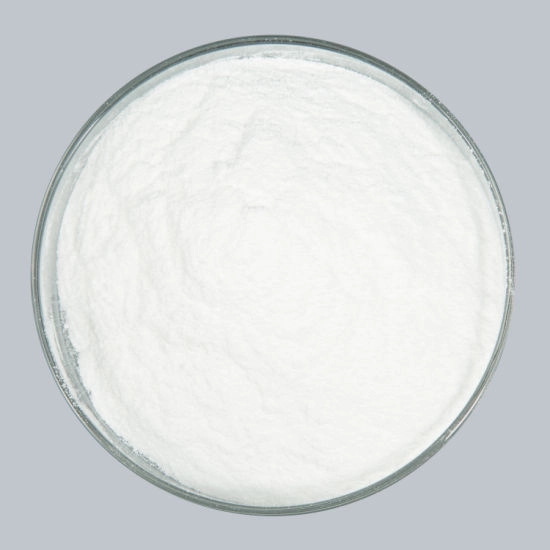
Products Description
1,3-Dimethylurea (CAS 96-31-1), abbreviated as DMU, also named N,N'-Dimethylurea or sym-Dimethylurea, is a symmetrical substituted urea derivative with excellent water solubility and stable chemical properties.
It is a key raw material for low-formaldehyde / formaldehyde-free textile cross-linking finishing agents for cotton fabrics, improving wrinkle resistance and dimensional stability. It also serves as an important intermediate in the synthesis of pharmaceuticals, agrochemicals, coatings resins and adhesives. In biochemical and laboratory fields, it can be applied as a solvent and protein denaturant.
This crystal product features low volatility, good compatibility with polar systems, and easy handling. Store in cool, dry and ventilated place, keep away from moisture. Bulk supply and lab sample service are available.
Product Name: | 1,3-Dimethylurea |
Synonyms: | 1,3-Dimethylurea Factory;N,N'-Dimethylurea Factory;1,3-Dimethylurea COA TDS MSDS;n,n’-dimethylharnstoff;n,n’-dimethyl-ure;N,N'-Dimethylharnstoff;Symmetric dimethylurea;Urea, 1,3-dimethyl- |
CAS: | 96-31-1 |
MF: | C3H8N2O |
MW: | 88.11 |
EINECS: | 202-498-7 |
Product Categories: | Chemical Biology;Peptide Chemistry;Bioactive Small Molecules;Building Blocks;Carbonyl Compounds;Cell Biology;Chemical Synthesis;DIG-DY;Organic Building Blocks;Ureas;Standard Boc Amino Acids;Amino Acid Derivatives;Functional Materials;Organic Nonlinear Optical Materials;bc0001;96-31-1;VX:15169101773 |
Mol File: | 96-31-1.mol |
Chemical Properties
Melting point | 101-104 °C(lit.) |
Boiling point | 268-270 °C(lit.) |
density | 1.142 |
bulk density | 500kg/m3 |
vapor pressure | 6 hPa (115 °C) |
refractive index | 1.4715 (estimate) |
Fp | 157 °C |
storage temp. | Store below +30°C. |
solubility | H2O: 0.1 g/mL, clear, colorless |
pka | 14.57±0.46(Predicted) |
form | Crystals |
color | White |
PH | 9.0-9.5 (100g/l, H2O, 20℃) |
Water Solubility | 765 g/L (21.5 ºC) |
BRN | 1740672 |
Cosmetics Ingredients Functions | NAIL CONDITIONING |
InChI | 1S/C3H8N2O/c1-4-3(6)5-2/h1-2H3,(H2,4,5,6) |
InChIKey | MGJKQDOBUOMPEZ-UHFFFAOYSA-N |
SMILES | CNC(=O)NC |
LogP | -0.783 at 25℃ |
CAS DataBase Reference | 96-31-1(CAS DataBase Reference) |
NIST Chemistry Reference | Urea, N,N'-dimethyl-(96-31-1) |
EPA Substance Registry System | 1,3-Dimethylurea (96-31-1) |
Safety Information
Risk Statements | 62-63-68 |
Safety Statements | 22-24/25 |
WGK Germany | 1 |
RTECS | YS9868000 |
F | 10-21 |
Autoignition Temperature | 400 °C |
TSCA | TSCA listed |
HS Code | 2924199090 |
Storage Class | 11 - Combustible Solids |
Hazardous Substances Data | 96-31-1(Hazardous Substances Data) |
Toxicity | LD50 orally in Rabbit: 4000 mg/kg |
Product Applications
It is used as an intermediate in the synthesis of theophylline and caffeine, and also plays an important role in the manufacture of fiber treatment agents.


