
Product Overview
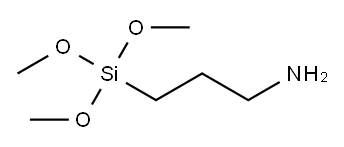
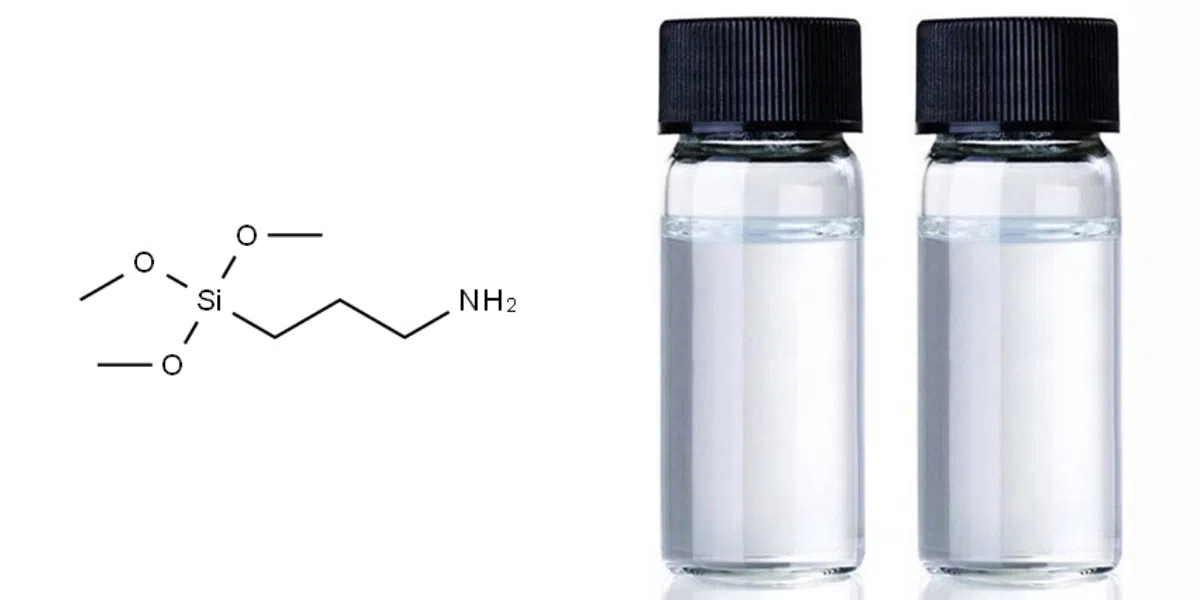
3-Aminopropyltrimethoxysilane, also known as APTMS or (3-aminopropyl)trimethoxysilane, is an amino-functional organosilane widely used as a silane coupling agent and chemical intermediate. Its molecular formula is C6H17NO3Si, and its molecular weight is 179.29 g/mol. The molecule contains a primary amino group and three hydrolyzable methoxy groups attached to a silicon atom, giving it both organic and inorganic reactivity.
APTMS is typically supplied as a clear, colorless to slightly yellowish liquid. When exposed to moisture, its methoxy groups hydrolyze to form silanol groups, which can subsequently condense with hydroxyl groups on inorganic surfaces or form siloxane networks. This chemical behavior makes it useful for improving compatibility and adhesion between organic polymers and inorganic substrates. It is commonly applied in glass treatment, mineral surface modification, polymer composites, and coating formulations. Its performance depends on purity, moisture content, processing conditions, and substrate characteristics.
3-Aminopropyltrimethoxysilane Chemical Properties
Melting point | <-60°C |
Boiling point | 91-92 °C15 mm Hg(lit.) |
density | 1.027 g/mL at 25 °C(lit.) |
vapor pressure | 0-12790Pa at 20-25℃ |
refractive index | n20/D 1.424(lit.) |
Fp | 182 °F |
storage temp. | Store below +30°C. |
solubility | Chloroform (Slightly), Methanol (Slightly) |
form | Liquid |
pka | 10.61±0.10(Predicted) |
Specific Gravity | 1.027 |
color | Clear colorless |
PH | >9 (20g/l, H2O, 20℃) |
Water Solubility | reacts |
Sensitive | Moisture Sensitive |
Hydrolytic Sensitivity | 7: reacts slowly with moisture/water |
BRN | 2038118 |
Stability: | Stable, but moisture sensitive. Incompatible with water, strong acids, strong oxidizing agents. Combustible. |
InChIKey | SJECZPVISLOESU-UHFFFAOYSA-N |
LogP | -4--0.82 at 20℃ |
CAS DataBase Reference | 13822-56-5(CAS DataBase Reference) |
NIST Chemistry Reference | 1-Propanamine, 3-(trimethoxysilyl)-(13822-56-5) |
EPA Substance Registry System | 1-Propanamine, 3-(trimethoxysilyl)- (13822-56-5) |
Safety Information
Hazard Codes | Xi,C |
Risk Statements | 36/38-34-41-38 |
Safety Statements | 26-45-36/37/39-25-39 |
WGK Germany | 3 |
F | 1-10 |
Autoignition Temperature | 295 °C |
TSCA | Yes |
HS Code | 29310095 |
Safety and Storage
3-Aminopropyltrimethoxysilane should be handled carefully in accordance with the applicable Safety Data Sheet (SDS). Supplier safety documentation identifies hazards including skin irritation and serious eye damage. Avoid direct contact with skin and eyes, and prevent inhalation of vapors or aerosols. Use suitable chemical-resistant gloves, protective clothing, and safety goggles or a face shield. Handling should take place in a well-ventilated area, preferably with appropriate local exhaust ventilation.
This material is moisture-sensitive and can react with water through hydrolysis, potentially releasing methanol. Therefore, containers should remain tightly closed when not in use. Store in a cool, dry, and well-ventilated location, protected from direct sunlight, excessive heat, and moisture. Keep away from incompatible substances and prevent accidental contamination during transfer or packaging. Use clean, dry equipment and suitable sealed containers. Any spilled material should be managed according to the supplier's spill-response instructions. Do not discharge residues into drains or the environment. Always consult the current supplier-specific SDS for detailed handling, first-aid, fire-fighting, and disposal requirements.


