
Product Overview
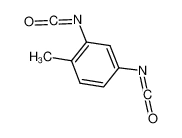
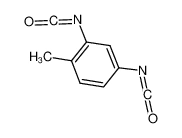
Tolylene-2,4-diisocyanate, commonly known as 2,4-TDI, is an aromatic diisocyanate with the molecular formula C₉H₆N₂O₂ and a molecular weight of 174.16 g/mol. Its molecular structure contains a toluene aromatic ring substituted with two highly reactive isocyanate groups. These functional groups react with hydroxyl-containing compounds, particularly polyols, to form polyurethane materials.
Pure 2,4-TDI is generally a colorless to pale-yellow liquid near room temperature, although it can solidify at lower temperatures. Commercial TDI products may contain a mixture of 2,4-TDI and 2,6-TDI isomers, with an 80:20 ratio being a common industrial composition. The exact composition depends on the product specification.
Tolylene-2,4-diisocyanate is an important raw material in polyurethane manufacturing. It is used in the production of polyurethane foams, elastomers, coatings, adhesives, sealants, and other polymeric materials. Its high chemical reactivity makes it suitable for reactions with polyols and other active-hydrogen compounds. The resulting materials can be formulated with different mechanical and physical properties according to the selected polyol, formulation design, and processing conditions.
Safety and Storage
Tolylene-2,4-diisocyanate is a highly hazardous industrial chemical that requires strict handling controls. It can be fatal if inhaled and may cause respiratory sensitization, potentially triggering asthma or serious breathing difficulties after exposure. It can also cause skin irritation, eye irritation, and allergic skin reactions. Repeated or uncontrolled exposure may result in serious respiratory health effects. The substance should only be handled by trained personnel using appropriate industrial safety procedures.
Avoid breathing vapors, aerosols, or droplets. Handle the material in a closed system or under effective local exhaust ventilation. Appropriate respiratory protection, chemical-resistant gloves, protective clothing, and sealed eye protection are essential, with the specific equipment selected through a workplace risk assessment. Ordinary ventilation alone may not provide adequate protection.
Store in tightly sealed, moisture-resistant containers in a cool, dry, well-ventilated area. Protect the product from water, humidity, heat, and direct sunlight. Contact with moisture can cause decomposition and release carbon dioxide, potentially creating dangerous pressure buildup in closed containers. Keep away from incompatible substances, especially water and other reactive materials.
Tolylene-2,4-diisocyanate Chemical Properties
Melting point | 20-22 °C(lit.) |
Boiling point | 124-126 °C18 mm Hg(lit.) |
density | 1.225 g/mL at 25 °C |
vapor density | 6 (vs air) |
vapor pressure | 0.03 mm Hg ( 25 °C) |
refractive index | n20/D 1.568(lit.) |
Fp | 250 °F |
storage temp. | 2-8°C |
solubility | Miscible with ether, acetone, benzene, carbontetrachloride and chlorobenzene. |
form | Liquid |
Specific Gravity | 1.225 |
color | Colorless |
Odor | Sharp, pungent odor detectable at 0.02 to 0.4 ppm |
explosive limit | 9.5% |
Water Solubility | reacts |
Sensitive | Moisture Sensitive |
Merck | 14,9530 |
BRN | 744602 |
Exposure limits | TLV-TWA 0.0355 mg/m3 (0.005 ppm) (ACGIH and NIOSH); STEL or ceiling/10 min 0.142 mg/m3 (0.02 ppm) (ACGIH, NIOSH, and OSHA); IDLH 71 mg/m3 (10 ppm) (NIOSH). |
Stability: | Stable, but decomposes in the presence of moisture. Also heat and light sensitive. Readily polymerizes in contact with base. Reacts with compounds containing active hydrogen. Incompatible with strong oxidizing agents. Corrodes some copper and aluminium alloys. |
InChIKey | DVKJHBMWWAPEIU-UHFFFAOYSA-N |
LogP | 3.43 at 22℃ |
CAS DataBase Reference | 584-84-9(CAS DataBase Reference) |
NIST Chemistry Reference | Benzene, 2,4-diisocyanato-1-methyl-(584-84-9) |
EPA Substance Registry System | Toluene-2,4-diisocyanate (584-84-9) |
Safety Information
Hazard Codes | T+ |
Risk Statements | 26-36/37/38-40-42/43-52/53 |
Safety Statements | 23-36/37-45-61 |
RIDADR | UN 2078 6.1/PG 2 |
WGK Germany | 2 |
RTECS | CZ6300000 |
F | 10-21 |
Autoignition Temperature | >619 °C |
TSCA | Yes |
HazardClass | 6.1 |
PackingGroup | II |
HS Code | 29291010 |
Hazardous Substances Data | 584-84-9(Hazardous Substances Data) |
Toxicity | Acute oral LD50 for rats 5,800 mg/kg, wild birds 100 mg/kg (quoted, RTECS, 1985). |
IDLA | 2.5 ppm |


