
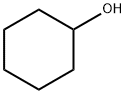
Products Description
Cyclohexanol is a transparent, colorless to pale yellow liquid characterized by a viscous texture, hygroscopic properties, and a camphor-like odor. According to Punter (1983), its odor detection threshold was reported to be approximately 64 μg/m³ (155 ppbv). It exhibits a relatively high flash point and boiling point. Cyclohexanol is commonly used as a solvent for cellulose ethers, ester gums, shellac, low-viscosity silicones, and polyvinyl chloride (PVC). Its application in screen-printing inks is relatively limited. Additionally, it is miscible with oils and various hydrocarbon solvents.

Chemical Properties
Melting point | 20-22 °C (lit.) |
Boiling point | 160-161 °C (lit.) |
density | 0.948 g/mL at 25 °C (lit.) |
vapor density | 3.5 (vs air) |
vapor pressure | 0.98 mm Hg ( 25 °C) |
refractive index | n20/D |
Fp | 67 °C |
storage temp. | Store below +30°C. |
solubility | 40g/l |
form | Liquid After Melting |
pka | 16 |
color | Clear colorless |
Odor | Like camphor. |
Relative polarity | 0.509 |
PH | 6.5 (40g/l, H2O, 20℃) |
explosive limit | 2-11.2%(V) |
Odor Type | camphoreous |
Water Solubility | 3.6 g/100 mL (20 ºC) |
Sensitive | Hygroscopic |
Merck | 14,2725 |
BRN | 906744 |
Henry's Law Constant | 16.9 at 50.00 °C, 34.4 at 60.00 °C (headspace-GC, Hovorka et al., 2002) |
Dielectric constant | 15.0(25℃) |
Exposure limits | TLV-TWA 200 mg/m3 (50 ppm) (ACGIH); IDLH 3500 ppm (NIOSH). |
Stability: | Stable. Incompatible with oxidizing agents. Reacts violently with oxidizing agents such as hydrogen peroxide and nitric acid, even at room temperature, to form an explosive material. Hygroscopic. Combustible. |
LogP | 1.25 at 25℃ |
CAS DataBase Reference | 108-93-0(CAS DataBase Reference) |
NIST Chemistry Reference | Cyclohexanol(108-93-0) |
EPA Substance Registry System | Cyclohexanol (108-93-0) |
Safety Information
Hazard Codes | Xn |
Risk Statements | 20/22-37/38 |
Safety Statements | 24/25 |
OEB | A |
OEL | TWA: 50 ppm (200 mg/m3) [skin] |
WGK Germany | 1 |
RTECS | GV7875000 |
F | 21 |
Autoignition Temperature | 572 °F |
TSCA | Yes |
HS Code | 2906 12 00 |
Hazardous Substances Data | 108-93-0(Hazardous Substances Data) |
Toxicity | LD50 orally in rats: 2.06 g/kg (Smyth) |
IDLA | 400 ppm |
Product Applications
1. Production of Nylon: Cyclohexanol is an important raw material in the manufacture of adipic acid and hexamethylenediamine, both of which are essential components in the production of nylon 66 through polycondensation. Nylon 66 exhibits excellent mechanical properties, including high tensile strength, good wear resistance, and strong chemical corrosion resistance. Consequently, it is widely used in textiles, automotive components, electronic appliances, machinery, and other industrial applications.
2. Production of Cyclohexanone: Cyclohexanone can be obtained through the catalytic dehydrogenation of cyclohexanol. It is an important organic solvent and chemical intermediate, primarily used in the production of caprolactam and adipic acid. In addition, cyclohexanone is employed in the manufacture of rubber antioxidants, plasticizers, coatings, and printing inks.
Pharmaceutical Applications: Cyclohexanol can serve as a solvent and intermediate in pharmaceutical synthesis. It may be used as a reaction medium in the preparation of certain pharmaceutical compounds or participate in the synthesis of biologically active substances. For example, it can be utilized in the synthesis of pharmaceutical products such as ceftriaxone.
Surfactant Production: Cyclohexanol can also be used as a raw material for synthesizing various surfactants, such as alkyl cyclohexanol polyoxyethylene ethers. These compounds possess favorable emulsifying, dispersing, and wetting properties, making them suitable for applications in detergents, cosmetics, pesticides, and other industrial products.
Analytical Chemistry and Detection: In analytical chemistry, cyclohexanol can be employed as a solvent in several analytical determination methods. These include the colorimetric determination of molybdenum and rhenium, the determination of aluminum using phenylhydrazine, and the detection of bismuth using 8-quinolinol or iodide-based methods.


