
Products Description
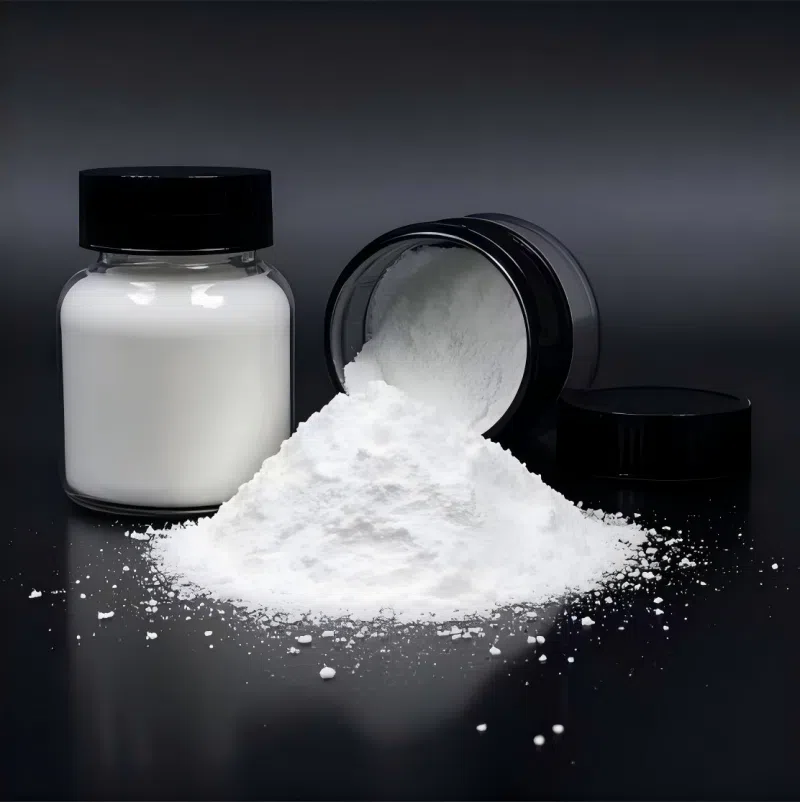
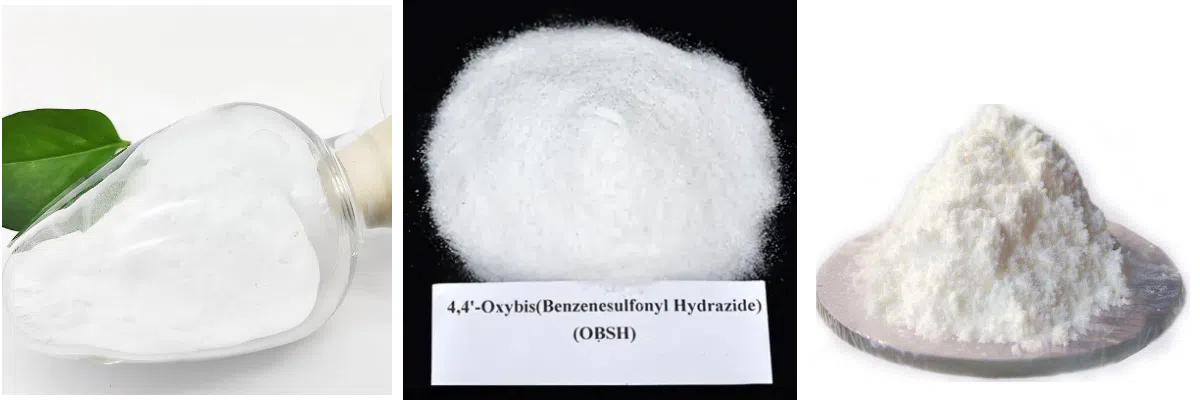
4,4'-Oxobenzenesulfonylhydrazide, also known as bis(benzenesulfonylhydrazide) ether, is an organic compound with the molecular formula C₁₂H₁₄N₄O₅S₂. It appears as a white crystalline powder and is slightly soluble in hot water and ethanol but insoluble in cold water and most organic solvents. It is primarily used as a chemical foaming agent in the rubber and plastics industries.
Chemical Properties
Melting point | 160-161 °C (dec.)(lit.) |
Boiling point | 590.0±60.0 °C(Predicted) |
density | 1.4940 (rough estimate) |
vapor pressure | 0.001Pa at 80℃ |
refractive index | 1.6000 (estimate) |
storage temp. | -20°C Freezer, Under inert atmosphere |
solubility | DMSO (Slightly, Sonicated), Methanol (Slightly, Heated, Sonicated) |
pka | 8.76±0.10(Predicted) |
form | Solid |
color | White |
Water Solubility | Insoluble in water. |
Henry's Law Constant | 7.8×10¹¹ mol/(m3Pa) at 25℃, HSDB (2015) |
Exposure limits | ACGIH: TWA 0.1 mg/m3 |
LogP | 0.08 |
CAS DataBase Reference | 80-51-3(CAS DataBase Reference) |
NIST Chemistry Reference | 4,4'-Oxydibenzenesulfonyl hydrazide(80-51-3) |
EPA Substance Registry System | Benzenesulfonic acid, 4,4'-oxybis-, 1,1'-dihydrazide (80-51-3) |
Safety Information
Hazard Codes | Xi |
Risk Statements | 36/37/38 |
Safety Statements | 26-37/39 |
WGK Germany | 3 |
RTECS | DB7321000 |
TSCA | TSCA listed |
HazardClass | 4.1 |
HS Code | 2935900090 |
Hazardous Substances Data | 80-51-3(Hazardous Substances Data) |
Toxicity | mma-sat 800 mg/plate NEZAAQ 33,474,78 |
Product Applications
Organic sulfonyl hydrazide foaming agents are widely used in the rubber and plastics industries and are often regarded as versatile, general-purpose foaming agents.
They are suitable for a variety of polymers, including polyvinyl chloride (PVC), polyethylene (PE), polypropylene (PP), and ABS resins. They can also be used in rubber-resin blends and for foaming various synthetic rubbers.
Typical applications include wallpaper, carpets, communication cables, artificial leather, and various packaging materials. These foaming agents produce fine, uniform cell structures, making them particularly suitable for manufacturing different types of foam plastics, such as polyethylene foam for wire and cable insulation and microporous PVC paste foam. When combined with sodium bicarbonate, they can achieve a lower decomposition temperature. Additionally, when used in chloroprene rubber, they can help promote vulcanization.


