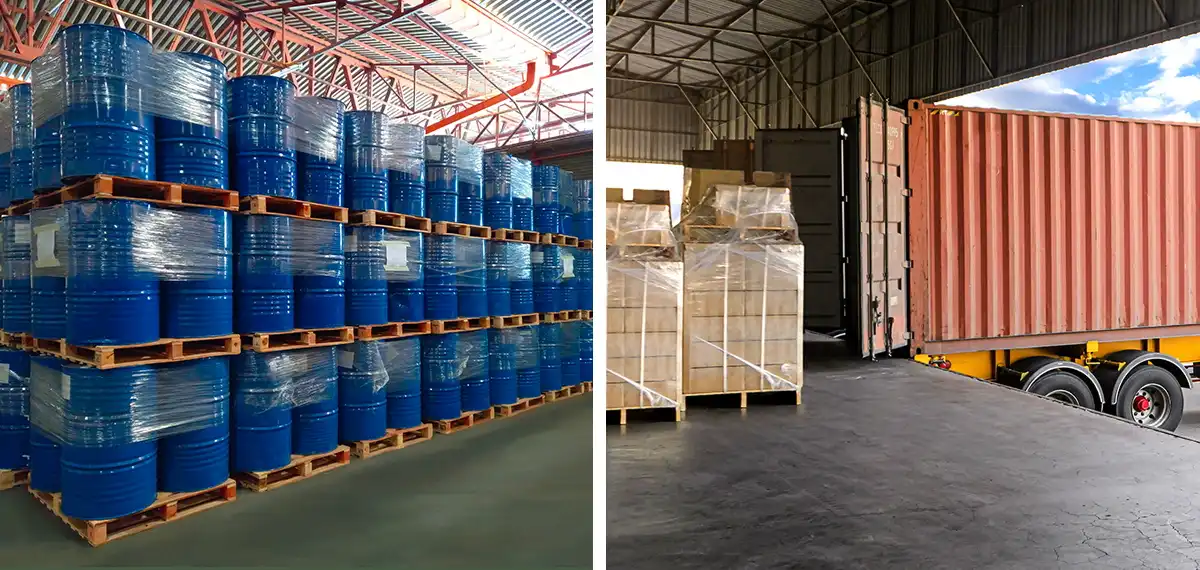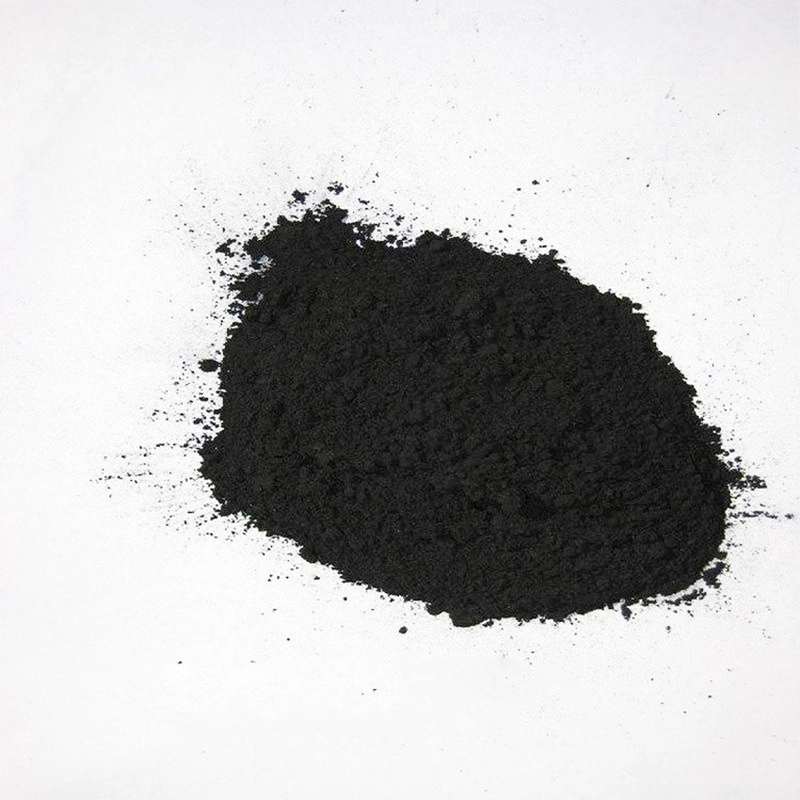
Carbon black functions as a finely powdered carbon substance serving diverse industrial purposes. Suspended in air, it can introduce fire or explosion hazards if an ignition source is present, and contact with moisture may trigger slow self-heating combustion. Because of its microscopic particle dimensions, inhalation contact needs strict management, maintaining an occupational exposure threshold limit value of 3.5 mg/m³ within air environments.
This material finds primary utilization in manufacturing automotive tires, rubber goods, plastic items, carbon paper, printing inks, and solar power absorption substrates. Furthermore, it is extensively employed as a dark colorant, strengthening filler, conductive agent, and multi-functional medium across multiple manufacturing sectors.
Within food processing, carbon black acts as a consumable black dye and nutritional colorant. It is utilized in food goods including baked sweets, grain products, flour-based items, confections, cookies, and related foodstuffs adhering to controlled regulatory boundaries.
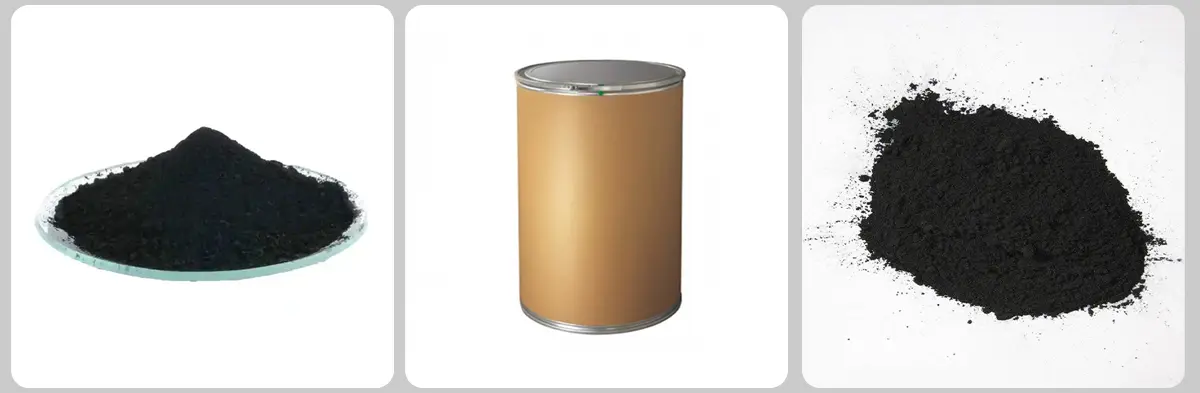
Carbon Black Chemical Properties
| Melting point | 3550 °C(lit.) |
| Boiling point | 500-600 °C(lit.) |
| density | ~1.7 g/mL at 25 °C(lit.) |
| vapor pressure | <0.1 mm Hg ( 20 °C) |
| Fp | >230 °F |
| solubility | H2O: soluble0.1mg/mL |
| form | rod |
| color | Clear colorless |
| Specific Gravity | bulk 0.10/g/cm3 |
| Water Solubility | Insoluble |
| Merck | 141808 |
| Exposure limits | ACGIH: TWA 3 mg/m3 |
| OSHA: TWA 3.5 mg/m3 | |
| NIOSH: IDLH 1750 mg/m3; TWA 3.5 mg/m3; TWA 0.1 mg/m3 | |
| Dielectric constant | 2.5(Ambient) |
| Stability: | Stable. Combustible. |
| InChIKey | VNWKTOKETHGBQD-UHFFFAOYSA-N |
| LogP | 1.090 (est) |
| IARC | 2B (Vol. Sup 7, 65, 93) 2010 |
| EPA Substance Registry System | Carbon black (1333-86-4) |
| Hazard Codes | |
| OEB | B |
| OEL | TWA: 3.5 mg/m3 |
| WGK Germany | 3 |
| RTECS | FF5250100 |
| TSCA | Yes |
| Hazardous Substances Data | 1333-86-4(Hazardous Substances Data) |
| Toxicity | LD50 oral in rat: > 15400mg/kg |
| IDLA | 1,750 mg/m3 |

Within the rubber sector, carbon black functions as a vital reinforcing additive, elevating the mechanical performance of rubber goods. It sees broad adoption across automotive tires, treads, sidewalls, solid tires, conveyor belts, hoses, industrial elastomer goods, and alternative uses. Carbon black reinforcement boosts the tensile strength, wear resistance, elongation, and tear tolerance of vulcanized rubber, rendering it ideal for high-speed tires, heavy-duty engineering tires, and industrial rubber parts.
Carbon black additionally functions as a tinting pigment within paints, protective coatings, and printing inks. It is deployed during the fabrication of black paper, photo-product packaging substrates, carbon paper, typewriter ribbons, footwear polishes, leather surface treatments, pigmented concrete, and related dark-colored matrices.
Owing to its superior electrical conductivity, carbon black operates as a conductive additive in lithium-ion energy cells, microelectronic parts, static-dissipative rubber goods, conductive electrodes, and electronic brushes. It is additionally utilized throughout plastic manufacturing, metallurgical applications, rocket propellant formulations, and specialized technological fields.
Backed by its versatile physicochemical characteristics, carbon black persists as an indispensable foundational substance for elastomeric strengthening, coloration, electrical enhancement, and industrial material modification. Appropriate warehousing and management protocols must be observed to guarantee operational safety.