
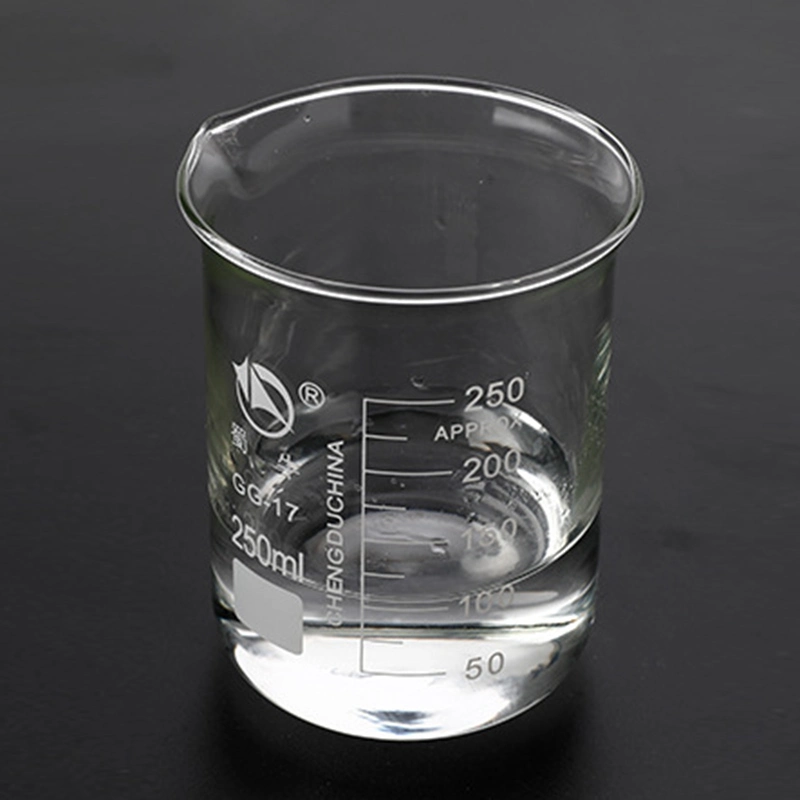
Products Description of Glyoxal CAS#107-22-2
Glyoxal, also known as ethanedial, is an organic dialdehyde with the molecular formula OCHCHO. Its molecule contains two aldehyde functional groups (-CHO), and it is recognized as the simplest dialdehyde. Commercial glyoxal is normally supplied as glyoxal 40% aqueous solution, presenting a yellow liquid state under ambient temperature. With active aldehyde groups, this industrial crosslinking agent shows great potential in textile, paper and leather processing.
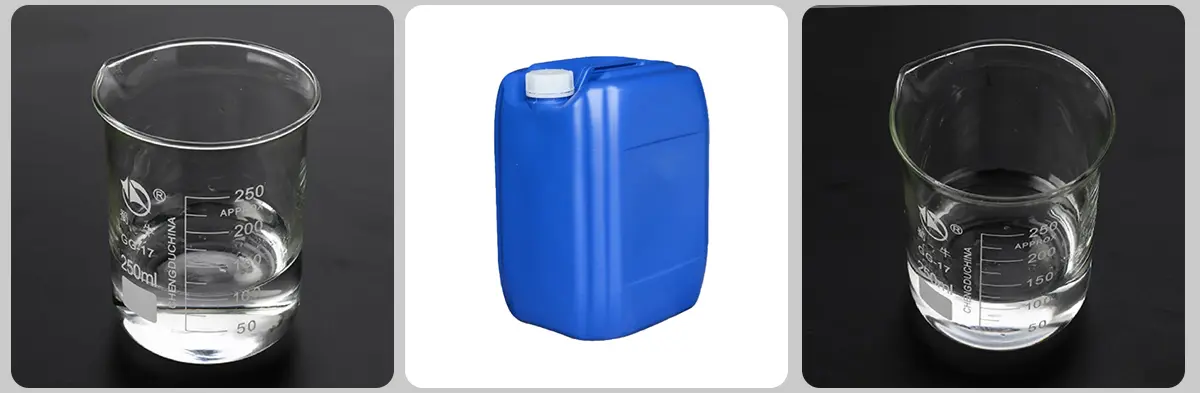
Glyoxal Chemical Properties
| Melting point | -14 °C |
| Boiling point | 104 °C |
| density | 1.265 g/mL at 25 °C |
| vapor density | >1 (vs air) |
| vapor pressure | 18 mm Hg ( 20 °C) |
| refractive index | n20/D 1.409 |
| Fp | 104°C |
| storage temp. | 2-8°C |
| solubility | water: soluble(lit.) |
| form | Liquid |
| color | Clear colorless to yellow |
| Odor | yel. crystals or lt. yel. liq., mild odor |
| Water Solubility | miscible |
| Merck | 14,4509 |
| BRN | 1732463 |
| Exposure limits | ACGIH: TWA 0.1 mg/m3 |
| Stability: | Stability Combustible. Incompatible with strong oxidizing agents. Strong reducing agent. May polyermize exothermically. Incompatible with air, water, oxygen, peroxides, amides, amines, hydroxy-containing materials, nitric acid, aldehydes. Corrodes many metals. |
| InChIKey | LEQAOMBKQFMDFZ-UHFFFAOYSA-N |
| LogP | -1.15 at 20℃ |
| CAS DataBase Reference | 107-22-2(CAS DataBase Reference) |
| NIST Chemistry Reference | Ethanedial(107-22-2) |
| EPA Substance Registry System | Glyoxal (107-22-2) |
Product Application of Glyoxal CAS#107-22-2
As a highly reactive dialdehyde cross‑linking agent, glyoxal 40% aqueous solution finds major deployment within the textile sector as a functional fiber‑finishing chemical. It improves dimensional stability by boosting shrink‑control and wrinkle‑recovery performance for cotton, nylon and other synthetic‑cellulosic fabrics, and functions as an efficient durable‑press finishing agent. In Japan, textile durable‑press finishing alone accounts for around 80 % of total glyoxal consumption.
Thanks to its dual aldehyde reactivity, glyoxal works as an insolubilizing binder for gelatin, animal glue, casein, polyvinyl alcohol (PVA), starch and other polymeric substrates. Beyond textiles, it takes part in leather‑tanning workflows and serves as a key raw material for manufacturing waterproof matches.
Glyoxal acts as a core building‑block for diversified organic‑synthesis routes. Condensation reactions with acetaldehyde, urea and formaldehyde yield 2D‑resin, which is widely adopted for fabric finishing formulations Made in China. When reacted together with formaldehyde and ammonium sulfate, glyoxal cyclizes into imidazole skeletons, the fundamental moiety for manufacturing imidazole‑class antifungal agents including clotrimazole and miconazole.
Additionally, glyoxal serves as a critical synthetic intermediate for pyrazinamide, a first‑line anti‑tuberculosis medicine, as well as hydroxyphenylacetic acid, a precursor for multiple antibiotic and vitamin‑A‑series derivatives. It further participates in the manufacturing workflow of berberine hydrochloride and sulfamethoxypyrazine sulfonamide pharmaceuticals. Apart from pharma synthesis, glyoxal covers miscellaneous industrial segments such as insecticide production, deodorant formulations, embalming agents and sand‑mold curing agents for foundry operations.


