
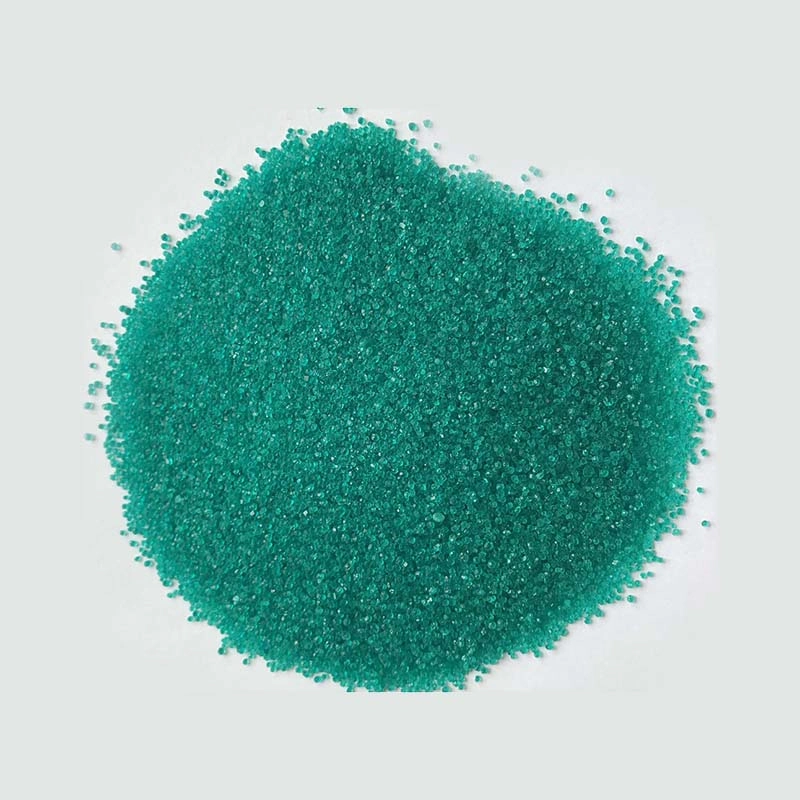
Nickel carbonate CAS#3333-67-3
Nickel carbonate appears as a light‑green crystalline solid under ambient temperature. It is practically insoluble in pure water; however, its solubility rises in water containing carbon dioxide. It dissolves in aqueous ammonia and dilute acids, yet remains insoluble in cold concentrated hydrochloric acid and nitric acid. Upon intense heating in air, nickel carbonate decomposes into nickel oxides. It can also react with ammonium chloride solution to liberate carbon dioxide (CO₂) and ammonia (NH₃), yielding nickel(II) chloride solution.
As an important nickel‑bearing compound, nickel carbonate occurs in multiple variants: neutral nickel carbonate, basic nickel carbonate and acidic nickel carbonate. It is commonly synthesized by reacting nickel nitrate with aqueous soda‑ash solution. Owing to different manufacturing processes, neutral and acidic nickel carbonate are seldom obtained in pure state, whereas basic nickel carbonate represents the main commercial grade available on the market.
Basic nickel carbonate is a high‑value chemical feedstock extensively applied in industrial catalysts, precision electroplating, PCB electroplating, alloy electroplating, nickel‑alloy electroforming, ceramics and many other sectors. It acts as a key precursor for manufacturing diverse nickel salts and qualifies as a promising new‑generation chemical capable of substituting conventional petrochemical catalysts.
Against growing public focus on environmental protection, traditional nickel nitrate catalysts draw criticism for nitrogen‑oxide emissions. By comparison, basic nickel carbonate is nitrate‑free and produces no nitrogen‑oxide pollutants. This renders it an eco‑friendly catalyst material for petroleum processing. It is projected to progressively replace classic nickel nitrate catalysts with rising market demand.
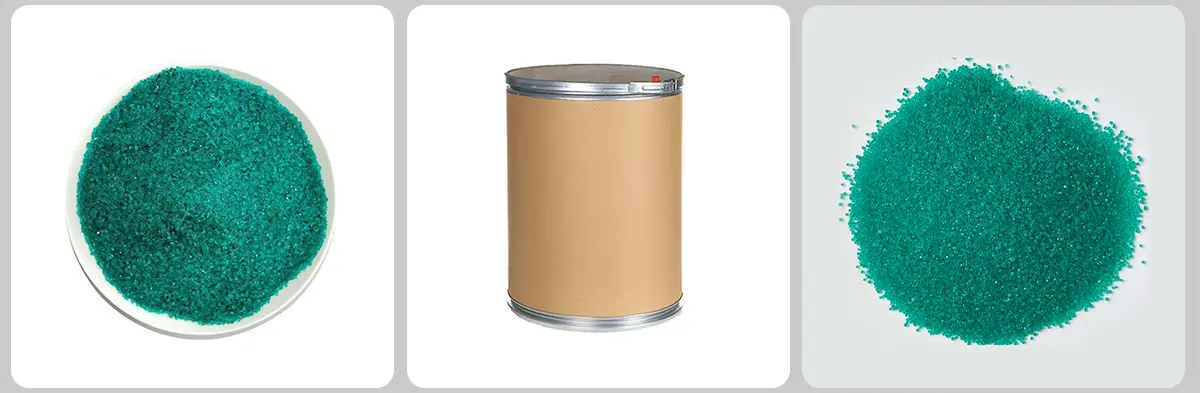
Nickel carbonate Chemical Properties
| Melting point | decomposes [CRC10] |
| density | 4.39 |
| solubility | soluble in dilute acid solutions |
| form | Solid |
| color | Light Green |
| Water Solubility | Soluble in dilute acids. Insoluble in cold water. |
| Solubility Product Constant (Ksp) | pKsp: 6.85 |
| Exposure limits | ACGIH: TWA 0.2 mg/m3 |
| NIOSH: IDLH 10 mg/m3; TWA 0.015 mg/m3 | |
| Stability: | Stable. Incompatible with strong acids. |
| CAS DataBase Reference | 3333-67-3(CAS DataBase Reference) |
| EPA Substance Registry System | Nickel carbonate (3333-67-3) |
| Hazard Codes | Xn,N |
| Risk Statements | 22-40-43-50/53 |
| Safety Statements | 22-36/37-60-61 |
| RIDADR | UN3077 |
| RTECS | QR6200000 |
| TSCA | Yes |
| HazardClass | 9 |
| PackingGroup | III |
| HS Code | 2836991780 |
| Hazardous Substances Data | 3333-67-3(Hazardous Substances Data) |
Product Application of Nickel Carbonate CAS#3333-67-3
Nickel carbonate finds broad‑ranging application across multiple sectors including electroplating, catalyst production, dyestuff & pigment manufacturing, and various other chemical‑processing fields. High‑purity basic nickel carbonate also acts as a critical synthetic intermediate for manufacturing nickel oxide, nickel‑series salts, and diverse organonickel compounds.


