2-Amino-3-Pyridinecarboxaldehyde CAS#7521-41-7 Product Description
2-Amino-3-pyridinecarboxaldehyde is a nitrogen-containing heterocyclic compound belonging to the pyridine derivative family. It exhibits basic chemical properties and is widely utilized in organic synthesis, medicinal chemistry, and pharmaceutical development as an important synthetic intermediate. Due to its versatile molecular structure, the compound can participate in various organic reactions, including condensation, cyclization, and nucleophilic substitution, providing an effective route for the preparation of a range of pyridine-containing organic molecules. These characteristics make it a useful building block in both fundamental chemical research and the development of more complex functional compounds.
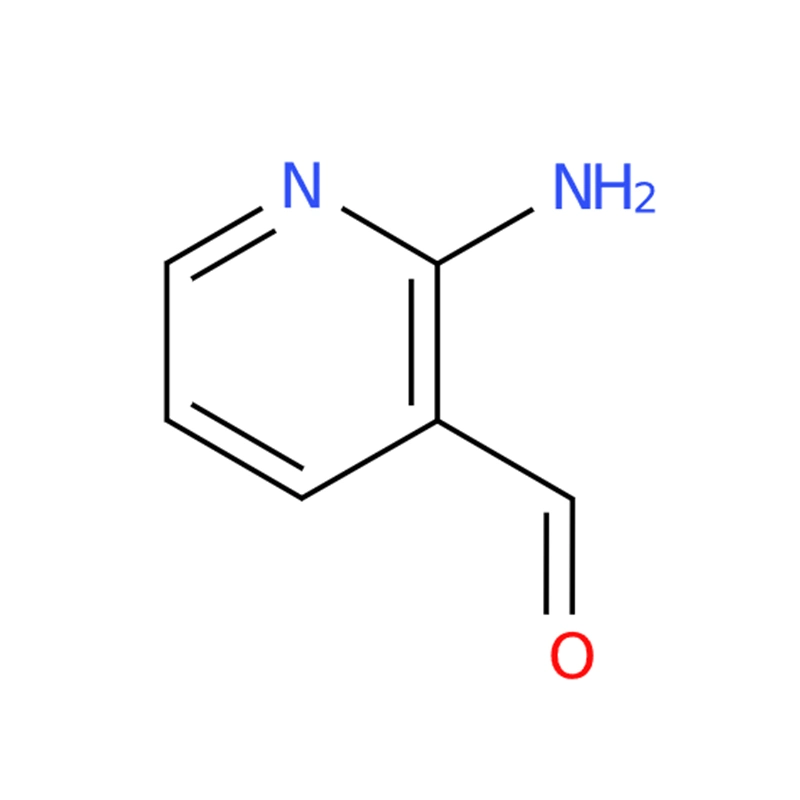
Structurally, 2-Amino-3-pyridinecarboxaldehyde contains three important functional features: a nitrogen-containing pyridine ring, an amino group, and a reactive aldehyde group. The presence of these functional groups provides multiple reaction sites and enables the molecule to undergo a variety of chemical transformations. In particular, the amino and aldehyde groups offer opportunities for further molecular modification and the construction of structurally diverse heterocyclic compounds.
Regarding its chemical stability, 2-Amino-3-pyridinecarboxaldehyde may be sensitive to strong oxidizing agents and certain unfavorable storage conditions. Exposure to oxidizing substances can promote the oxidation of its aldehyde functionality and potentially result in the formation of degradation products, affecting the compound's purity and stability. Therefore, appropriate storage conditions and protection from incompatible oxidizing substances are important for maintaining its chemical quality during handling and use.
2-Amino-3-Pyridinecarboxaldehyde CAS#7521-41-7 Chemical Properties
| Melting point | 98-102 °C (lit.) |
| Boiling point | 290.7±25.0 °C(Predicted) |
| density | 1.264±0.06 g/cm3(Predicted) |
| Fp | >300℃ |
| storage temp. | Keep in dark place,Sealed in dry,Room Temperature |
| solubility | Chloroform (Slightly), Methanol (Slightly) |
| pka | 4.99±0.36(Predicted) |
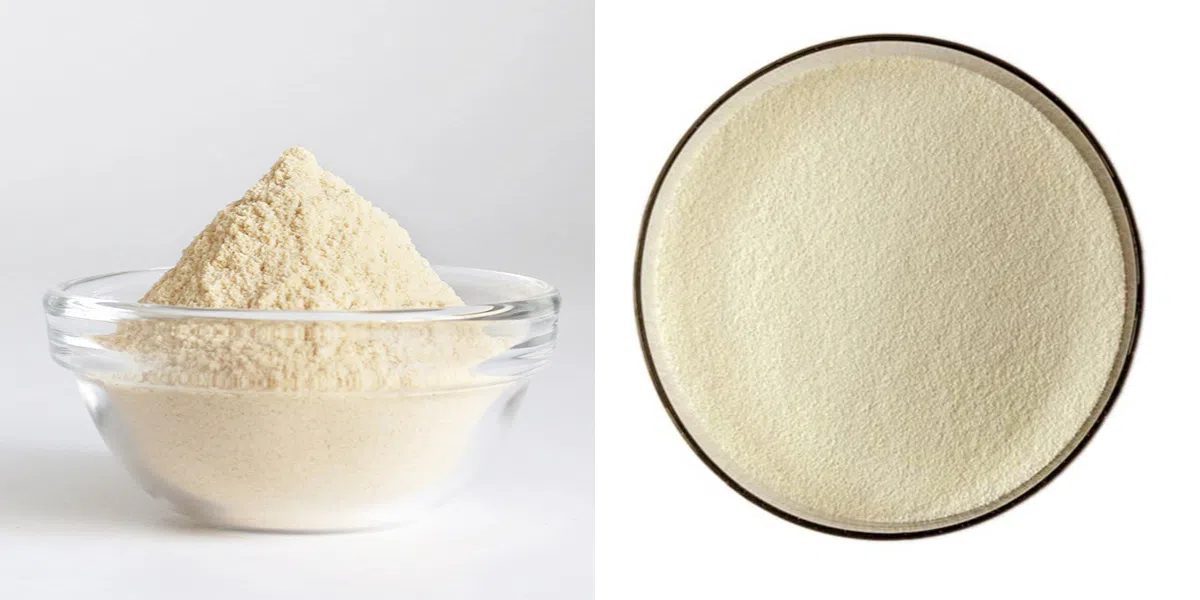
| form | Powder, Crystals and/or Chunks |
| color | Yellow to light brown |
| Water Solubility | insoluble |
| Sensitive | Air Sensitive |
| BRN | 109598 |
| InChIKey | NXMFJCRMSDRXLD-UHFFFAOYSA-N |
| CAS DataBase Reference | 7521-41-7(CAS DataBase Reference) |
2-Amino-3-Pyridinecarboxaldehyde CAS#7521-41-7 Safety Information
| Hazard Codes | Xi,Xn |
| Risk Statements | 36/37/38-20/21/22 |
| Safety Statements | 26-36-36/37/39 |
| WGK Germany | 3 |
| HazardClass | IRRITANT |
| PackingGroup | II |
| HS Code | 29339900 |
2-Amino-3-Pyridinecarboxaldehyde CAS#7521-41-7 Product Application
2-Amino-3-pyridinecarboxaldehyde is a versatile synthetic intermediate that can be employed in the preparation of various pyridine-based organic ligands and functional small molecules. By taking advantage of its reactive amino and aldehyde functionalities, the compound can undergo a range of chemical transformations to generate structurally diverse ligand systems. These pyridine-containing ligands have important applications in coordination chemistry, where their nitrogen-based coordination sites enable interactions with different metal ions to form stable metal complexes. Such complexes are of particular interest in catalysis, as they can facilitate various organic transformations and potentially improve reaction selectivity, catalytic activity, and overall efficiency in synthetic processes.
Furthermore, the pyridine ring provides a useful structural framework for the introduction and modification of different functional groups through appropriate chemical reactions. This flexibility allows researchers to develop a broad range of functional molecules with tailored structural and physicochemical properties. The resulting compounds may find applications in several advanced research areas, including materials science, optoelectronics, chemical sensing, and biological research. Potential applications include the development of fluorescent probes, biologically active molecules, molecular recognition systems, and advanced functional materials, highlighting the value of 2-Amino-3-pyridinecarboxaldehyde as a building block in organic synthesis and interdisciplinary chemical research.