Products Description
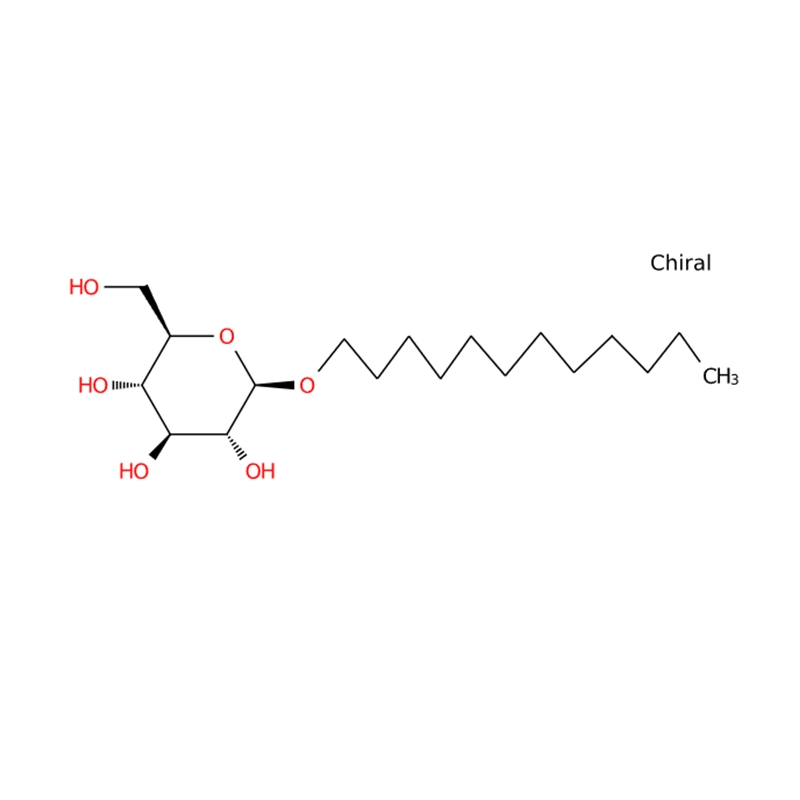
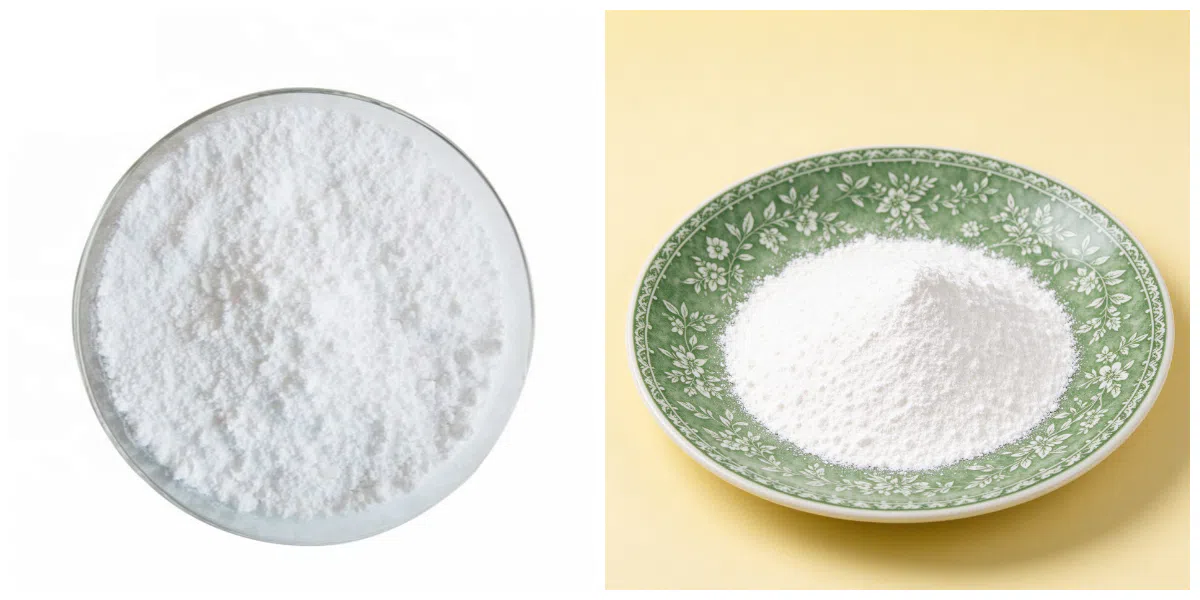
N-Dodecyl-beta-D-glucopyranoside, also known as Dodecyl Glucoside or BDDG, has CAS 59122-55-3, molecular formula C₁₈H₃₆O₆ and molecular weight 348.48. It is a high-purity alkyl glucoside nonionic surfactant, appearing as white to off-white crystalline powder. It features a low critical micelle concentration and gentle solubilization performance. It is stable under normal conditions and incompatible with strong oxidants. This biochemical-grade surfactant is widely used in biochemistry labs. It is non-dangerous goods but requires sealed storage at -20°C. We supply packaged specifications from gram scale up to bulk, with strict quality control and full test documents for global biotech and research customers.
Chemical Properties
| Melting point | 77-137 °C |
| Boiling point | 402.83°C (rough estimate) |
| Density | 1.0573 (rough estimate) |
| Refractive index | 1.4450 (estimate) |
| Storage temp | −20°C |
| Solubility | Soluble in methanol at 50mg/ml |
| Pka | 12.95±0.70(Predicted) |
| Form | Powder |
| Color | White to Off-white |
| BRN | 86236 |
| Stability | Stable. Incompatible with strong oxidizing agents. |
| InChI | InChI=1/C18H36O6/c1-2-3-4-5-6-7-8-9-10-11-12-23-18-17(22)16(21)15(20)14(13-19)24-18/h14-22H,2-13H2,1H3/t14-,15-,16+,17-,18-/s3 |
| InChIKey | PYIDGJJWBIBVIA-LQEOSLJMNA-N |
| SMILES | O([C@H]1[C@@H]([C@@H](O)[C@H](O)[C@@H](CO)O1)O)CCCCCCCCCCCC |&1:1,2,3,5,7,r| |
| CAS DataBase Reference | 59122-55-3(CAS DataBase Reference) |
| EPA Substance Registry System | Dodecyl-beta-D-glucoside (59122-55-3) |
Safety Information
| Hazard Codes | Xi |
| Risk Statements | 36/37/38 |
| Safety Statements | 26-36-36/37/39-37/39 |
| WGK Germany | 3 |
| F | 3 |
| HS Code | 29389090 |
Product Application
This compound is a classic nonionic detergent widely used in biochemical and molecular biology research, particularly for the solubilization, extraction, isolation, and purification of membrane-bound proteins, including G protein-coupled receptors (GPCRs). Its mild surfactant properties help preserve native protein structure, stability, and biological activity during extraction, purification, and subsequent analysis. It is also commonly applied in micelle formation, colloidal chemistry research, and membrane interaction studies to investigate the behavior of surfactants and their interactions with biological membranes. In addition, it can serve as a reference standard for the separation, identification, and analytical characterization of long-chain alkyl glucosides. Its applications further extend to formulation screening and the development of bioseparation reagents, protein purification systems, and specialized biological buffer formulations. Due to its effective solubilizing ability and relatively gentle interaction with sensitive biomolecules, this detergent is particularly valuable in experiments involving membrane proteins and other delicate biological materials where conventional harsh surfactants may cause protein denaturation, structural disruption, or loss of biological activity. Overall, it is an important research reagent for protein biochemistry, membrane biology, biochemical analysis, and advanced life science research.